
World 2.0: inside the architecture of new trade blocs
Globalization isn’t dying; it’s being rewired into regional systems. Here’s how blocs and corridors between Asia and Europe are building a new operating model—rules, routes, and finance that shift power through connectivity.

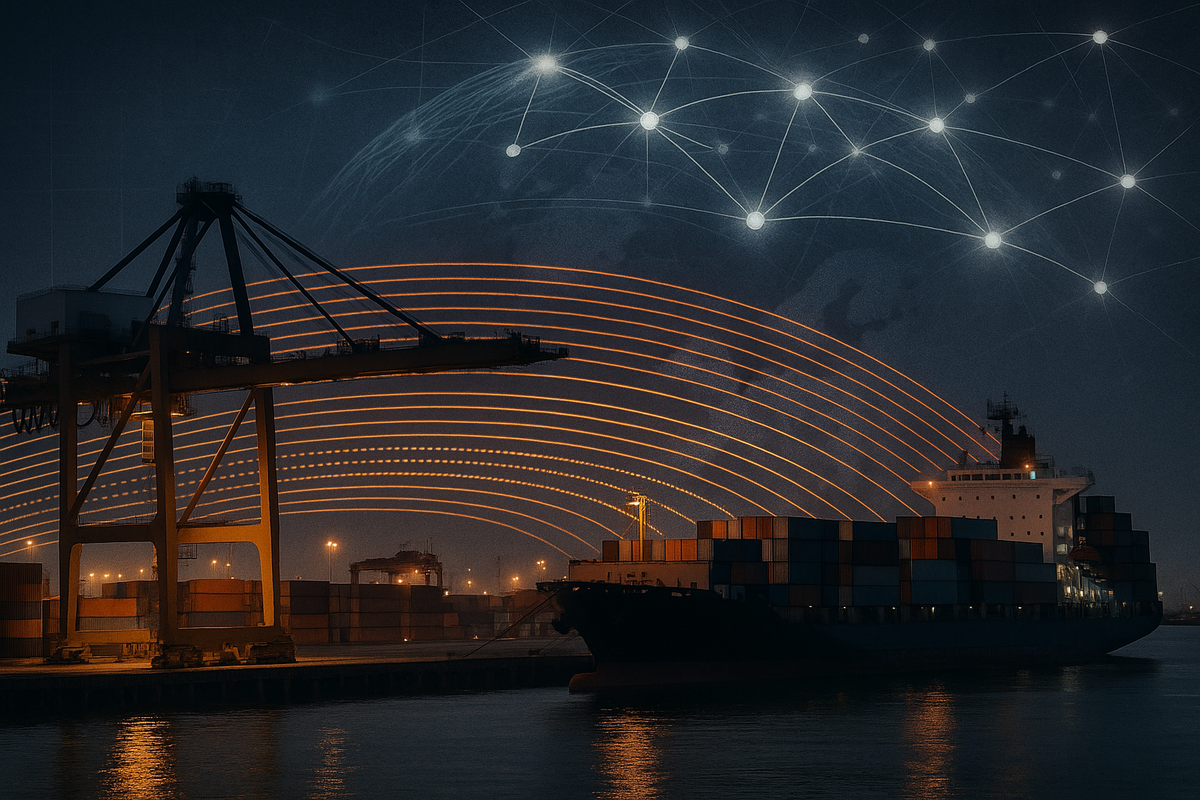
Despite what the more alarming news media may be insisting, globalization isn’t dying, or even facing collapse. Instead, it’s reorganizing.
The old hub-and-spoke world, World 1.0, where goods routed through a handful of Western chokepoints and rules were written in Washington and Brussels, that world is giving way to a mesh of regional systems that trade, finance, and set standards for themselves. These systems aren’t neat or uniform, and they often overlap, but together they hint at a new operating model, one of power via connectivity, not by proclamation.
And yes, in a broad sense and in order to capture the spirit of fundamental geopolitical changes that are in motion, we’re calling it World 2.0.
If you want to see how this works, look at the blocs and corridors now linking Asia and Europe. They reveal how countries are building alternatives to single-center dominance, not by closing borders, but by wiring new pathways between them. It’s a world switching from unipolar design to something more regional.
Rulebooks of World 2.0
The change shows up first in the rulebooks. Asia’s homegrown pacts, the Regional Comprehensive Economic Partnership (RCEP), the world’s largest trade bloc by sheer economic weight, and the higher-standard, slightly longer Comprehensive and Progressive Agreement for Trans-Pacific Partnership (CPTPP), have continued to deepen their memberships, even without U.S. leadership.
When the United Kingdom completed its accession to CPTPP in late 2024, something tacitly shifted and the agreement crossed a psychological line: it stopped being a Pacific-rim club and became something more… encompassing… a trans-regional rule platform, now with a European anchor as well. That move mattered less for British GDP than for the notion of governance authority, who has a vote when new members apply, how digital trade is defined, and which standards travel by default. The UK’s entry made the strategic point plainly: membership confers leverage over future applicants such as China and Taiwan, underscoring that blocs are as much about who sets the terms as about the math of tariff. (Reuters).
Corridors for policy, not just geography
However, while rules are all well and good, without routes, they don’t move anything. And this is why the second layer of World 2.0 is essentially physical: rail, ports, energy cables, and fiber spanning continents, all elements that redraw practical geography. The proposed India–Middle East–Europe Economic Corridor (IMEC) is a case in point. Announced at the G20 in 2023, it pairs the traditionally visible rail and maritime legs with parallel power and data links, an integrated design envisioned primarily to shorten India–Europe shipping times, diversify around any possible Suez instability, and create a corridor that carries electrons and information alongside containers.
This, therefore, constitutes three pillars: transport, energy, and digital. Those pillars are described as a single connectivity stack rather than disconnected projects, something more effectively interwoven and interdependent, which is why the initiative is also strategically interesting, since we are talking about a relatively volatile region. The vision, it’s clear, isn’t just speed, but resilience, a built-in safeguard against pressure on any single route. (Atlantic Council).
A similar logic animates the Middle Corridor across Central Asia and the Caucasus. This is a trans-Caspian path from China to Europe that completely bypasses Russia, a renewed Silk Road forged for risk-averse trade. Europe’s visible backing, under its Global Gateway agenda, and new coordination with Kazakhstan, Azerbaijan, Georgia, and Türkiye, point to a wider pattern, one in which countries are creating parallel pathways to reduce exposure to political shocks. These routes are governance choices, not detours. Each customs regime implemented, each port interoperable with a neighbor’s rail gauge, these factors describe a line of policy written into steel and software. In the past, where pipelines and shipping lanes conferred leverage on a few producers and landlords, the new corridors confer agency on mid-tier states, Silk Road ‘middlemen’ once more, that can convene, connect, and charge rent on the flow to promote their vested interest and effective participation.
Together, these corridors and trade pacts outline the first two layers of World 2.0: the rulebooks that define participation, and the routes that make those rules real. What completes the system is the flow of capital that moves through them.
So, to the third layer: finance and payments. It’s easiest to miss because it hides in the plumbing, so to speak. As blocs mature, they build their own capital circulation mechanisms: think development banks, lines of bloc-available export credit and, increasingly, cross-border payment ‘rails’ that avoid a single chokepoint. Some of this is diplomatic theater, a show of institutional cohesion; while some is actually concrete. The euro remains dominant across the EU and neighbors, and the dollar, for now, remains the world’s deep, trusted capital pool. The shift is toward multiple circuits that connect without relying on a single hub. It’s less about replacing one power and more about reducing the cost of rivalry for everyone caught in between.
When the blocs fit together
So what, precisely, is a bloc in this new architecture? Well, not just a treaty, but a stack of interlocking parts. And what are those many parts? We see rules for trade, data, and investment; physical capacity through ports, grids, and logistics; capital via development banks, export credit, and swap lines; and of course, mechanisms for enforcement, from standards bodies to dispute systems and, at times, security ties, the mechanisms that confer legitimacy and trust. The impact, to make this all even more nuanced, comes from how these layers align across countries. For example, RCEP streamlines rules and reduces friction in East and Southeast Asia; CPTPP creates advanced provisions on digital trade, labor, and the environment; corridors like IMEC and the Trans-Caspian route supply the infrastructure backbone; and national development banks, together with various regional funds, stitch the capital layer into a cohesive framework. When these layers align, a bloc functions smoothly even without a formal alliance. When they don’t, progress grinds to a halt.
This is why the recent expansion of BRICS matters beyond branding. In 2024, the grouping added the UAE, Saudi Arabia, Egypt, Iran, and Ethiopia, bringing several key pieces into place. These are major energy exporters and two crucial Red Sea–Gulf nodes, now brought into a forum that already includes China, India, Brazil, Russia, and South Africa.
The analysis reads the move as both symbolic, sure, but also as a systemic, a bid by a set of non-Western powers to coordinate on development finance, trade settlement, institutional reform, you name it, while reducing joint or individual exposure to any one center of gravity. At minimum, it creates a venue for common positions on standards and payments, the building blocks (no pun, honestly) of operational capacity. At maximum, it could evolve toward a new pole of global influence, one that set the rules for parts of the Global South. Either way, it’s a significant shift from the old reflex to default to a single hub of power. (Carnegie).

Asia and the Gulf: the pragmatists
Perhaps no country illustrates this operating logic better than India. Its “balancing act” isn’t diplomatic indecision; it’s a strategic model. Delhi opted to do several things: staying out of RCEP to avoid uneven exposure; working through partners like the UK to keep in the orbit of CPTPP; coordinating security through the Quad (a security dialogue linking India, Japan, Australia, and the United States), deepening energy and investment ties with the Gulf, and co-authoring IMEC with European support. The strategy is, again, resilience: build multiple routes for goods, data, energy, and capital so that no single crisis or sanction can block progress. This is what self-preservation looks like in World 2.0.
ASEAN’s approach is similar in spirit, if a little different in detail. The bloc’s “centrality” mantra is less about hierarchy and more about convening a neutral space where both China and Western partners can invest: RCEP on one hand, fast-growing Western direct investment on the other, plus emerging schemes within ASEAN for cross-border payments in local currencies and a visible de-dollarization. The result is a pragmatic web, based on immediate needs, in which Southeast Asia trades heavily with both sides while extracting real infrastructure commitments from each. In effect, ASEAN is making a calculated bet: that building connections in all directions is the surest path to staying independent.
The Gulf, meanwhile, is the bridge. By joining BRICS, coordinating oil policy with Russia, and simultaneously partnering with the EU and India on IMEC, Saudi Arabia and the UAE are turning their central geography into classic middleman leverage. Not ideological, just logistical. If they own the junctions where the action happens, think ports, cables, grid interconnectors, and data centers, then they gain an enduring relevance in any future world map the big powers sketch out.
Fragmentation? Reconfiguration?
Critics argue that all this is just fragmentation by another name: a complex array of pacts, too many different corridors, nothing truly global. Ok, there’s some truth to that. This is objectively a greater measure of complexity than contending with the prior notion of unipolarity. However, the deeper read is that the world is moving from one fragile singular system to several interconnected ones. Diversification is a healthy strategy in nature, so it goes that keeping the eggs in many baskets makes for economic pragmatism.
The risk of weaponizing any single chokepoint goes down when traffic can detour; the risk of misunderstanding goes down when data standards are published and aligned. The hard part is not laying track or pulling cable, it’s building trust frameworks, the interoperable permissions, the transparent finance, the shared maintenance and responsibility, all so the new routes don’t devolve into something of less benefit to the whole, to levers of coercion.
Governance by design
This brings us, full circle, back to governance. Every corridor is a policy choice. So is a port contract with open data and local legal resolution mechanisms, or a payment system that lets small firms trade in their own currency. The real politics now happen in technical details, yes, more often than not written in code. The countries that choose to treat these as shared decisions, that are open to debate, revision, and consensus, stand to build more resilient networks without slipping into a pattern of dependency. And for those that don’t? They will end up running on someone else’s system.
World 2.0, then, isn’t about rebranded “spheres of influence”, it’s about systems of interdependence based on mutual consent. Easier said than done, perhaps, but the challenge ahead is not between blocs, but between models of openness, whether shared standards stay shared, as public goods, or drift into proprietary control. This is a line that will define enduring prosperity far more than any reactive tariff or hastily arranged treaty.
Globalization used to reward scale: the ability to produce more, move faster, and reach farther. It was a big volume moment. The next phase, perhaps, will reward something subtler: trust. Openly published rules, transparent corridors, and shared data standards are becoming the civic foundations of a stable global system. The lessons from trade agreements, infrastructure corridors, and expanding blocs all point towards the same pattern: when rules are clear and participation wide, interdependencestrengthens resilience instead of creating vulnerabilities.
The world will remain connected, but the stability of that connection will depend on how openly and fairly it is managed.
Read this. Notice that. Do something.
Read this: This new era isn’t de-globalization; it’s a re-architecture. See Reuters’ coverage of the UK’s CPTPP accession to understand how rule-platforms gain reach; the Atlantic Council’s analysis of IMEC to see why corridors are being designed as transport-energy-digital stacks; and Carnegie’s assessment of BRICS expansion for how blocs seek governance leverage beyond the West.
Notice that: Blocs that align rules + routes + capital + enforcement become systems. Those built with transparency and interoperability raise prosperity and lower coercion risk; those built as black boxes just move the leverage elsewhere.
Do something: Favor open-standards corridors and published procurement. Ask your trade and infrastructure agencies to disclose data frameworks, dispute-resolution venues, and maintenance obligations. Connectivity is policy, so make it democratic.
Previously on GYST: Wired planet: can a global power grid survive national politics?
Next up, a follow-on piece: Law or leverage: South Korea’s moment of truth at Gyeongju