
What phase is the global system in now?
The world is not entering a new era of collapse or retreat. It is moving into a consolidation phase—where expansion gives way to constraint, rules catch up to scale, and choices quietly narrow.


The world is not entering a new era of collapse or retreat. It is moving into a consolidation phase—where expansion gives way to constraint, rules catch up to scale, and choices quietly narrow.
Water is shifting from background infrastructure to strategic constraint. Scarcity and volatility are hardening borders, stressing treaties, and creating trade dependencies. The geopolitics of water is less about “water wars” than governance under pressure.
For decades, technology expanded faster than the rules meant to govern it. By 2025, that balance flipped. As systems became too embedded and costly to reverse, governments stopped trusting markets to fix problems later and began setting limits up front.

Governments now frame open data flows as a security threat. Under the banner of sovereignty, rules meant to protect citizens are fragmenting the internet, slowing research, narrowing dissent, and shifting power upward—often without real oversight.
The world no longer resets between crises. As 2025 closes, financial stress, climate disruption, energy volatility, and geopolitical tension arrive at once, turning instability from an event into a permanent condition.
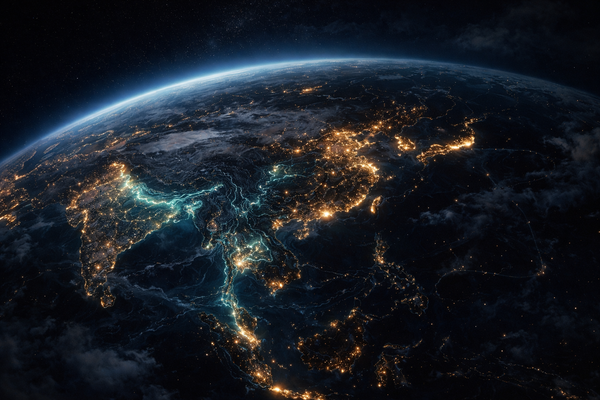
From Himalayan hydropower to China’s industrial north and the Mekong delta, Asia’s water stress is triggering a cascading crisis across energy, industry, and politics. The question isn’t if systems fail — but how far the ripple spreads.
AI’s rise is testing the limits of the physical world. Data centers now rival cities in their thirst for power and water, while chip supply chains strain global resources. The cost of intelligence isn’t just digital — it’s planetary.
Tariffs are back—and with them, a new kind of supply-chain fragility. As governments weaponize trade policy in the name of security, the global economy is reorganizing around blocs, dependencies, and deliberate risk.
Shutdowns, censorship, and undersea fragility are dismantling the world’s last shared space. The open internet is dying—and what replaces it will shape global power for decades.
Global manufacturing is scaling up again. Mega-factories promise efficiency and resilience—but also concentrate power, emissions, and dependency in fewer hands. The new industrial order may prove both efficient and brittle.
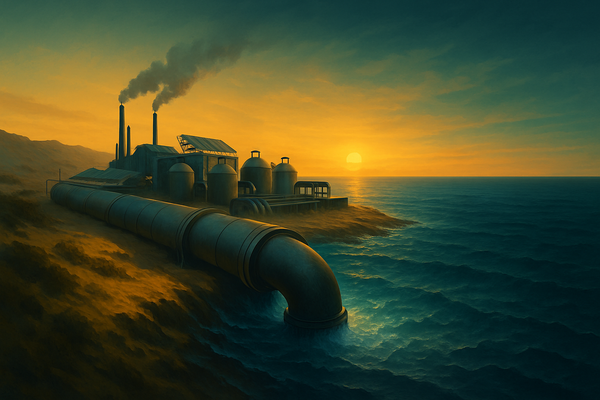
Around the world, water is shifting from geography to engineering. Desalination offers relief from drought — but at the price of energy, equity, and environmental strain. The new politics of water are already washing ashore.

COP30 promised urgency but proved how fragile climate unity has become. Adaptation money tripled, fossil language dodged, and power tilting south—all while the clock keeps counting down.