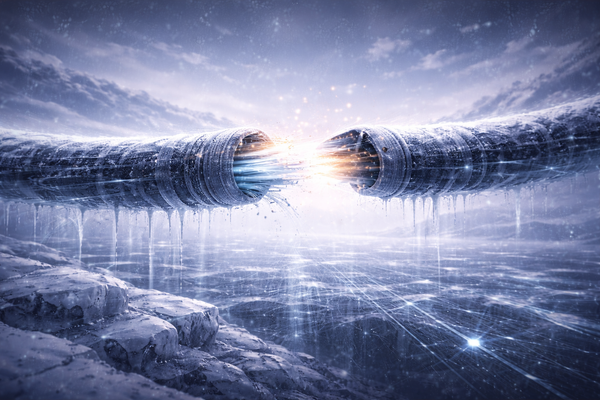
Wired planet: can a global power grid survive national politics?
A single global grid could balance renewable power between continents — but sovereignty, security, and trust keep the world’s currents divided.

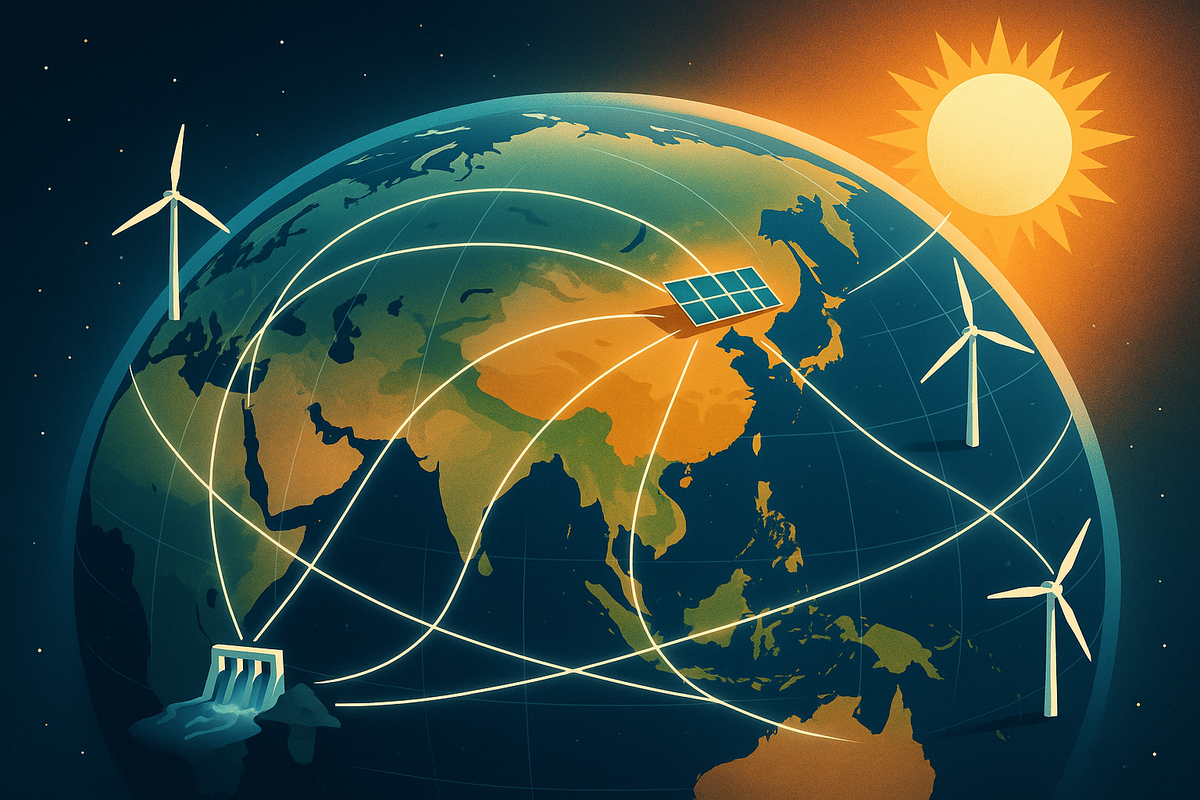
A truly global grid could balance the planet’s energy, turning sunlight, wind, and water into a shared resource. Yet every connection runs into the same barriers — politics, power, and trust.
The dream of a global power grid is disarmingly simple: link the world’s access to sun, wind, and water, so electricity can flow wherever it’s needed. Intermittency would become irrelevant in a globally connected grid that has constant generative capacity. When daylight fades in Europe, solar energy from the Sahara or the Gobi could keep its lights on. When Asia’s wind farms over-produce at night, surplus power could travel westward in seconds.
In principle, a planet-wide grid would smooth demand, cut fossil fuel use, and turn renewable energy into a shared resource rather than a national contest. Of course, “shared” would effectively reshape the nature of international cooperation, and as every cable that crosses a border touches on politics, for now, the world’s currents and generating capacities remain divided.
In theory, the technology exists. The next generation of HVDC (high-voltage direct-current) lines can transmit electricity thousands of kilometers with minimal loss, roughly three times farther than older alternating-current (AC) systems. Such networks already knit together parts of China and northern Europe: the EU’s grid is among the most interconnected on earth, and China’s State Grid Corporation runs ultra-long lines linking its western hydropower dams to its eastern industrial belt.
However, turning those regional webs into an intercontinental system, one that reaches beyond the domestic, collides with and tests notions of sovereignty, regulation, and trust. A shared grid would require governments to accept cross-border dependence at a time when fractures are appearing and many are doing the opposite.
From Asia’s mountains to Europe’s markets
The most ambitious global-grid idea came from Beijing, in 2016, when China’s State Grid proposed a Global Energy Interconnection (GEI), a network of ultra-high-voltage cables linking Asia, Europe, and eventually Africa. The plan would combine China’s breadth of generation, sending solar power from deserts, hydropower from highlands, and wind from offshore farms along new “electric Silk Roads.” China’s Belt and Road Initiative already funds visible infrastructure projects, the many highways, railways, and ports; GEI, instead, aims to add electrons to the mix. The political logic was clear: whoever builds and manages these cables shapes not just trade routes, but also takes the lead on standards, market access, and the emerging needs of a decarbonizing world.
China’s record lends it a certain credibility. It already operates the world’s largest domestic HVDC system, and Chinese firms dominate the production of transformers, conductors, and grid-control software. However, energy isn’t a simple trade product, and foreign governments read the strategy behind the engineering promise. Long before “energy security” became a buzzword in Europe, analysts warned that a grid centered on Chinese hardware could turn initial interconnection into dependence, then influence. Europe’s utilities see opportunity in importing low-cost Asian renewables, particularly following the slow untethering from Russian gas, but fear that geopolitical shocks such as sanctions, cyberattacks, or a sudden diplomatic freeze could flick off the continental switch.
In Europe, the North Sea Wind Power Hub and Mediterranean solar corridors demonstrate how complex even friendly cooperation can be. Transmission rules, pricing mechanisms, and environmental reviews vary by country, so when the EU debates energy integration, it talks of “solidarity mechanisms”, bureaucratic speak that masks real political friction. Some states worry about subsidizing neighbors, while others naturally distrust foreign control of what have always been domestic, strategic assets. Extending this experiment eastward, across the Caucasus or into Central Asia, only multiplies the difficulty.
Get GYST three times a week. Free.
Eurasian energy chessboard
Between China’s grid vision and Europe’s clean-power demand lies a vast intermediary zone spanning Central Asia, the Caspian, and the crossroads of Southwest Asia, now emerging as the heart of energy diplomacy. Kazakhstan and Uzbekistan export electricity both east and west; the Gulf states are investing in HVDC submarine cables through the Red Sea to connect solar capacity to Africa and beyond; and Russia, long dominant in Eurasian energy, finds itself bypassed as southern corridors proliferate.
For Beijing, these projects serve multiple goals: to export surplus manufacturing, secure long-term influence, and offer partners an alternative to Western finance. The grandly titled Global Energy Interconnection Development and Cooperation Organization (GEIDCO), a Beijing-based body launched by State Grid, has been making significant progress, signing cooperation agreements with more than 50 countries, many in Africa and West Asia. A case in point: Chinese companies already build or fund portions of the power link between Egypt and Saudi Arabia, a test run for intercontinental flow.
China’s Global Energy Interconnection proposal is as much a framework for geopolitical influence as for engineering: each transmission line a test of which nation’s standards, finance, and governance will define the future grid. (CSIS Reconnecting Asia).
Europe’s response has been more a cautious alignment rather than outright competition. Brussels backs trans-Mediterranean links through its Global Gateway initiative, offering public-sector finance packaged as transparent and rules-based. Projects like the EuroAsia Interconnector, a 1,200-km cable joining Israel, Cyprus, and Greece, and the Green Energy Corridor between North Africa and the EU, aim to diversify power supply while reducing over-reliance on any one partner. The European Commission’s Global Gateway framework positions these interconnectors as having twofold benefit: as climate tools and instruments of trust-building, a bid to link continents through transparent, rules-based energy trade rather than dependency. (European Commission).
In other words, the transition from oil barrels to electrons doesn’t remove the element of geopolitics; it rewires it. Where pipelines once dictated cross-border alliances, tomorrow’s grid interconnectors could do the same. The question is whether trust can stretch as far as the cables do.
The politics of electrons
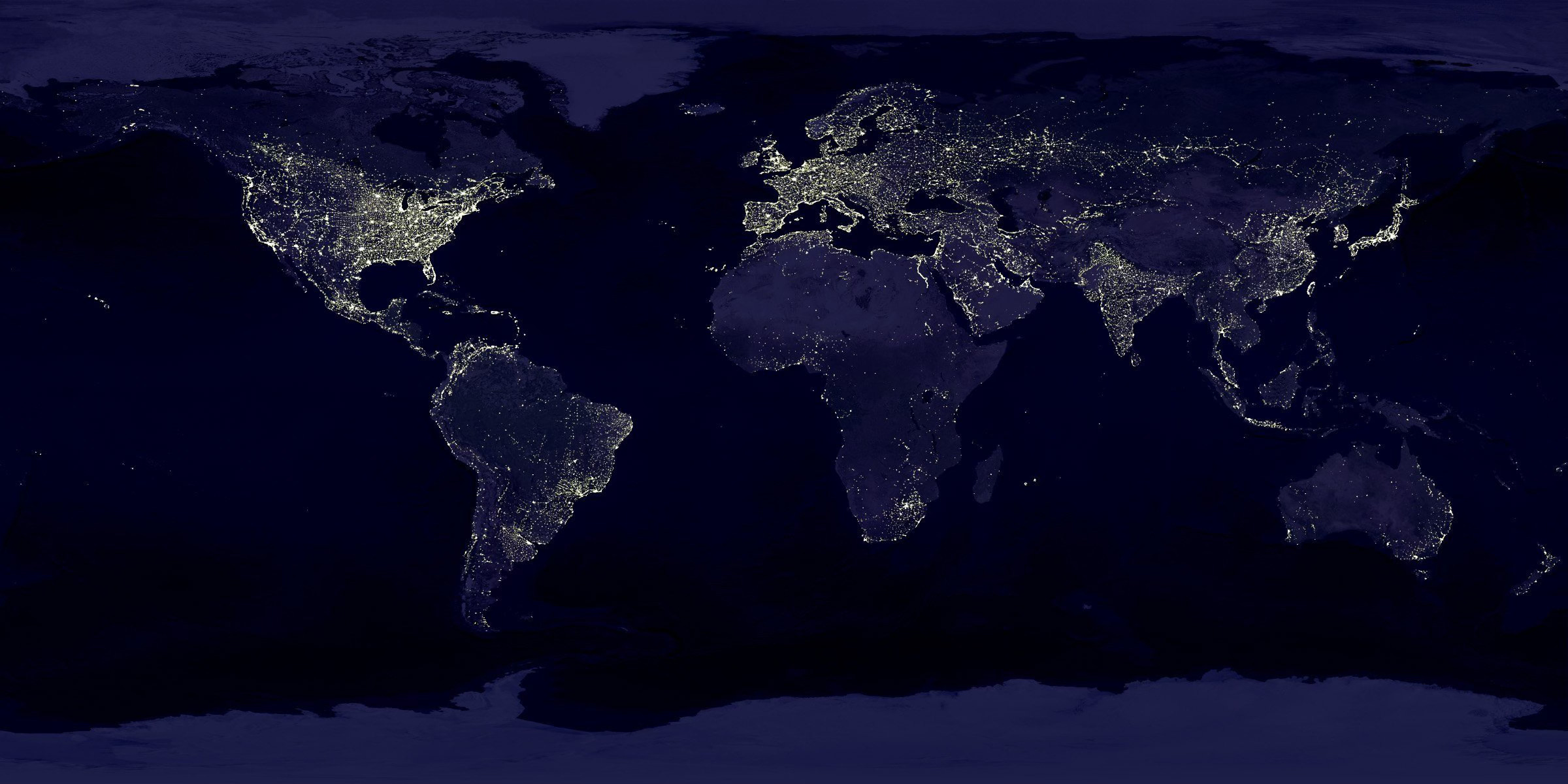
Electricity is an innocuous thing. It’s not easy to develop a relationship with it, it’s fleeting and relatively apolitical, that is until the moment it stops flowing. A blackout, unlike a tariff, is instantaneous and impactful, an immediacy that makes nations wary of surrendering their domestic control. The 2022 energy crisis after Russia’s invasion of Ukraine reinforced this instinct for self-sufficiency: countries raced to secure their own generation, even resorting to reopening old coal plants rather than hitching their trust on cross-border imports. This defensive reflex runs deep, and pushes against the logic of a future planetary grid that relies on constant exchange and interdependence.
China’s critics argue that its overseas energy projects, much like its digital infrastructure, can carry hidden dependencies, think proprietary software, opaque financing, or maintenance terms that develop reliance on Chinese firms. Beijing counters this, saying Western reluctance to invest leaves it with the obligation and opportunity to explore the gap. Both arguments hold truth, since in practice, most developing nations simply take what they can get. When Pakistan’s national grid collapsed in 2023 after a system failure, Chinese-built transmission lines helped restore power faster than local equipment could, yet the same arrangement lets China shape Pakistan’s energy future through pricing and the imposition of its technology standards.
For Europe, the politics are perhaps subtler, but no less real. Its internal grid relies on synchronized frequency, meaning that every turbine and line hums at the same 50 hertz. Integrating power from non-EU neighbours means modifying the system to align regulations, cybersecurity protocols, and carbon accounting. Each step in itself is contentious. Should imported electricity count toward a country’s renewable targets? Who polices data in smart-grid control systems when borders are crossed? These questions blur the line and create an uneasy grey zone between the engineering practicalities and the diplomatic imperatives that govern them.
A future connected but divided?
GYST has previously traced how governance is migrating into infrastructure, from code to cables (Who writes the code rules the world). The same logic now applies to power itself: the vision of a single, planetary grid moving renewable energy seamlessly across continents.
If the global grid remains unrealized, it won’t be for lack of cables. More likely it will be for lack of consensus. The hardware exists, while the software, the mindset and willpower, these perhaps lag. China’s drive for a transcontinental grid reveals this deeper tension between technical interdependence and political autonomy, with cross-border energy networks advancing only where governance systems are structurally capable of absorbing shared control. (RAND).
China’s GEI proposal still appears in presentations at international events, but most governments now, more cautiously, talk of “regional corridors.” Europe prefers to tighten its internal market before looking east; the Gulf Cooperation Council is building a shared grid that may later link to Egypt and Jordan; while India and ASEAN are studying connection feasibility across Southeast Asia to reduce their reliance on coal. None of these are dazzlingly planetary in scope, ultimately connective, but together they do sketch a denser, if fragmented, web.
In that sense, the wired planet may already be here— just uneven, politicized, and incomplete, compared at least to its original premise. Electricity crosses borders every second, yet the world’s power systems remain divided by trust, or the lack thereof.
Science is always happily impartial, and while the physics of electrons are universal; the politics of electrons, at least for now, are not.
Read this. Notice that. Do something.
Read this:
Efforts to link Asia’s and Europe’s power grids show that the hardest part of building a cleaner world isn’t technology but trust. As analyses by CSIS Reconnecting Asia and the RAND Corporation reveal, China’s vision for a Global Energy Interconnection could reshape not only power flows but also global standards and influence. Meanwhile, the European Commission’s Africa-Europe Green Energy Initiative shows how Europe is seeking its own form of energy interdependence, one framed through transparency and shared governance rather than control.
Notice that:
Cables and standards are becoming the new front lines of diplomacy. The global grid will rise only as far as nations trust one another’s switches.
Do something:
Support open-standards energy projects. Ask where your power really comes from, and who controls the current that keeps your world lit.
Previously on GYST: Who writes the code rules the world
Next up: World 2.0: inside the architecture of new trade blocs