
The vanishing pact: inside the collapse of the Tigris–Euphrates order
The Tigris–Euphrates basin once ran on an unwritten truce: seasonal releases, quiet committees, and downstream improvisation. Climate volatility and upstream control have erased that margin. Here’s how the “vanishing pact” failed — and what a workable order in a hotter basin would require.

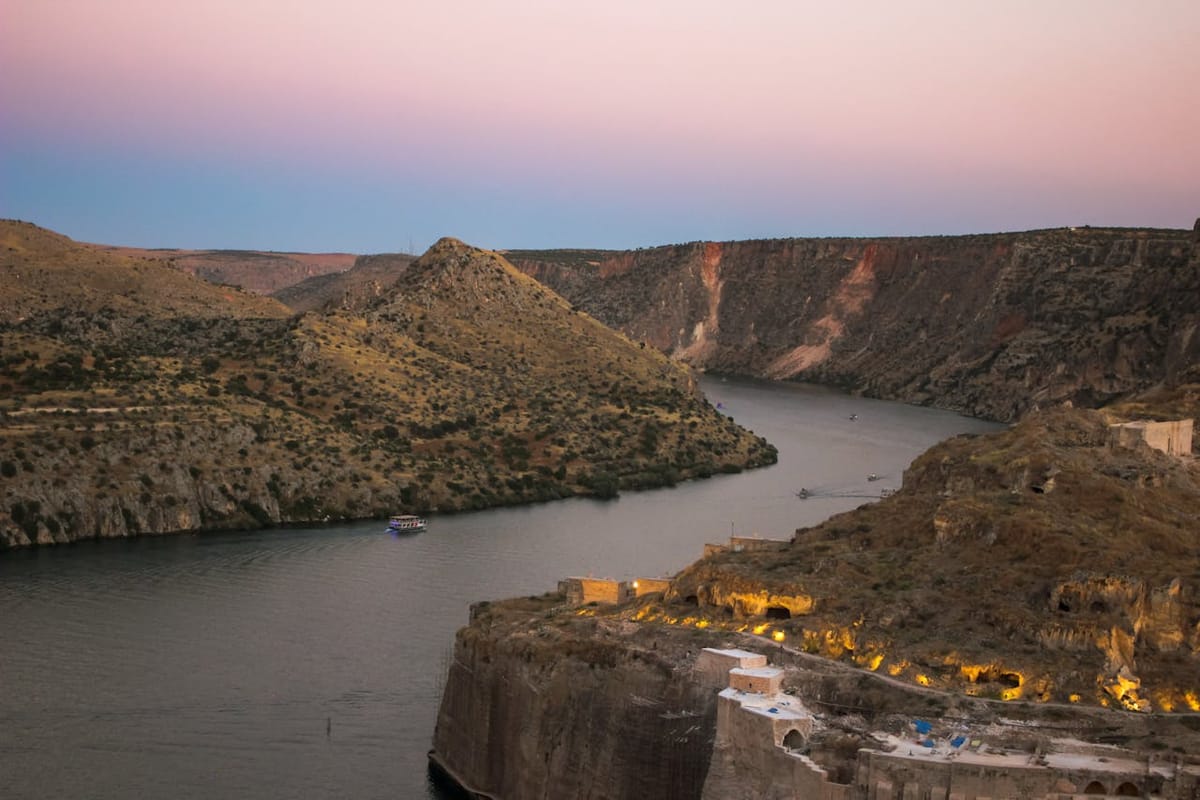
Upstream control, climate stress, and vanishing trust are rewriting the rules of Mesopotamia’s rivers.
For millennia, two rivers, the Tigris and the Euphrates, have defined the lands now shared by Turkey, Syria, and Iraq. Rising in the mountains of Anatolia and running more than 2,800 kilometers to the Persian Gulf, they carved the fertile plains that gave Mesopotamia its name: the land between the rivers. Those waters once cradled civilizations; today, they bind modern states in tension.
For decades, the basin had been held together by a fragile balance, a patchwork of technical committees, provisional accords, and political understandings that kept flows predictable and tempers contained. While never a formal treaty, it worked. Now, however, that tacit arrangement is dissolving amid a mix of complicating factors: upstream dam building, erratic rainfall, and hardening national postures that have turned water from a shared constraint into a strategic lever.
Get GYST x3 per week. Free.
By 2025, the numbers tell a stark story: average rainfall across the basin has dropped nearly 20 percent since the 1980s, while mean temperatures have risen about 1.2 °C above historical norms (World Bank CCDR). In southern Iraq, salinity levels in irrigation canals now exceed 4,000 mg/L during dry seasons, which is roughly twice the threshold that most crops can stand, and evaporation losses from reservoirs consume up to 25 percent of available surface water each year. The result is that without rapid adaptation, these stresses could cut Iraq’s agricultural output by a third within two decades.
The basin’s geometry, upstream control and downstream dependence, is not new. We’ve already seen this with our look at the Mekong. What is new is the speed at which those old accommodations, those agreements to share, are collapsing under climate volatility and the ensuing political fatigue.
How the pact formed and frayed
The “vanishing pact” was never written, but it worked as long as three conditions held: upstream restraint, minimum data transparency, and a downstream capacity to absorb shocks. All three of these factors eroded.
First, upstream restraint eroded. This was always Turkey’s prerogative, given that both rivers originate in the east of the country in the Anatolia region. That restraint gave way to the pressing cries of national development. Turkey’s Southeastern Anatolia Project (GAP), which was envisioned as 22 dams and 19 hydropower plants, with major irrigation build-out, basically re-plumbed the upper Tigris–Euphrates, a showpiece project to drive national growth and energy security (GAP). From Ankara’s vantage, using headwaters for domestic development is a sovereign right. From Baghdad’s view downriver, however, it is hydro-hegemony, tampering with the baseline flows, the lifeline waters on which Iraqi agriculture and cities have always depended. This gap in mutual perception has only widened as each new reservoir added storage, peaking power, and seasonal control upstream.
Second, transparency faltered. Data-sharing frameworks and joint technical committees have existed in some form or another, of course, but they were never institutionalized enough, formalized enough, to withstand geopolitical shocks. And, as diplomatic bandwidth narrowed, such as with Syria’s war; Turkish security operations against the PKK; or the ongoing churn of Iraqi politics, even routine coordination became at first sporadic, then reactive. Without credible, regular data on releases, storage levels, and seasonal forecasts, suspicion started to take the place of informed answers.
Third, downstream buffers thinned. Through decades of under-investment and conflict damage, Iraq’s irrigation networks and urban distribution networks saw loss rates and inefficiencies piled up. Salinity intruded deeper into the Shatt al-Arab, the river formed at the confluence of the Tigris and Euphrates, during low-flow periods, compounding agricultural stress. The result: less room to maneuver when upstream flows dipped or drought hit. Climate change makes that margin even slimmer, with projections of hotter, drier conditions amplifying evapotranspiration and crop water demand in the coming years (World Bank CCDR).
Climate makes it existential
While this may seem a problem of human-political causation, the climate component is not a distant abstraction; it is the force multiplier. Hotter baseline temperatures accelerate evaporation from reservoirs and canals. Rainfall patterns tend toward more frequent periods of drought, punctuated by damaging floods, in turn exacerbated by the prior drought conditions. Crop calendars, therefore, misalign with historic flows. In Iraq, climate-driven water scarcity threatens not just yields but grid stability (hydropower variability), public health (water-borne disease risks), and social cohesion (pressure towards rural displacement) (World Bank CCDR).
This is why the old “don’t rock the boat” logic is failing. In a more variable climate, if you passively rely on goodwill and seasonal custom, then this is a losing proposition for downstream states. Conversely, for an upstream state, the temptation to prioritize domestic control, to hold water longer and shape how you release that water based on national requirements, this only rises with volatility. It’s a stark realization that climate change does not create the politics; it sharpens the incentives.
Coercion by infrastructure
In the conventional sense, dams are not ‘weapons’, but they are instruments of political power that can enable leverage. The ability to retain meaningful volumes of water, the storage capacity, shifts negotiating power by turning a river’s timing (not only its volume!) into a policy choice. In periods of scarcity, the decision to release or retain water has immediate cross-border consequences for planting cycles, municipal supply, and marsh or wetland ecology. When downstream dependence is acute and the alternatives limited, a quiet form of coercion emerges, the feeling of being captive or seeing the other as captor. This can lead to other forms of action, and concessions can be coaxed on issues far from water: trade, border security, energy projects, even diplomatic alignments.
None of this implies a cartoon villain, an actual role of ‘captor’. Turkey also faces its own climate risks; its grid and farmers benefit from seasonal control; and Ankara, quite reasonably, argues, that better efficiency throughout the Tigris-Euphrates basin would go further than fixed quotas on volume. Stand back, though, and the power asymmetry is real. Without entering into a legally codified reality, a third-party verified treaty that sets firm expectations on management and future strategy, “trust us” cannot quite allay concerns for those under increasing stress.
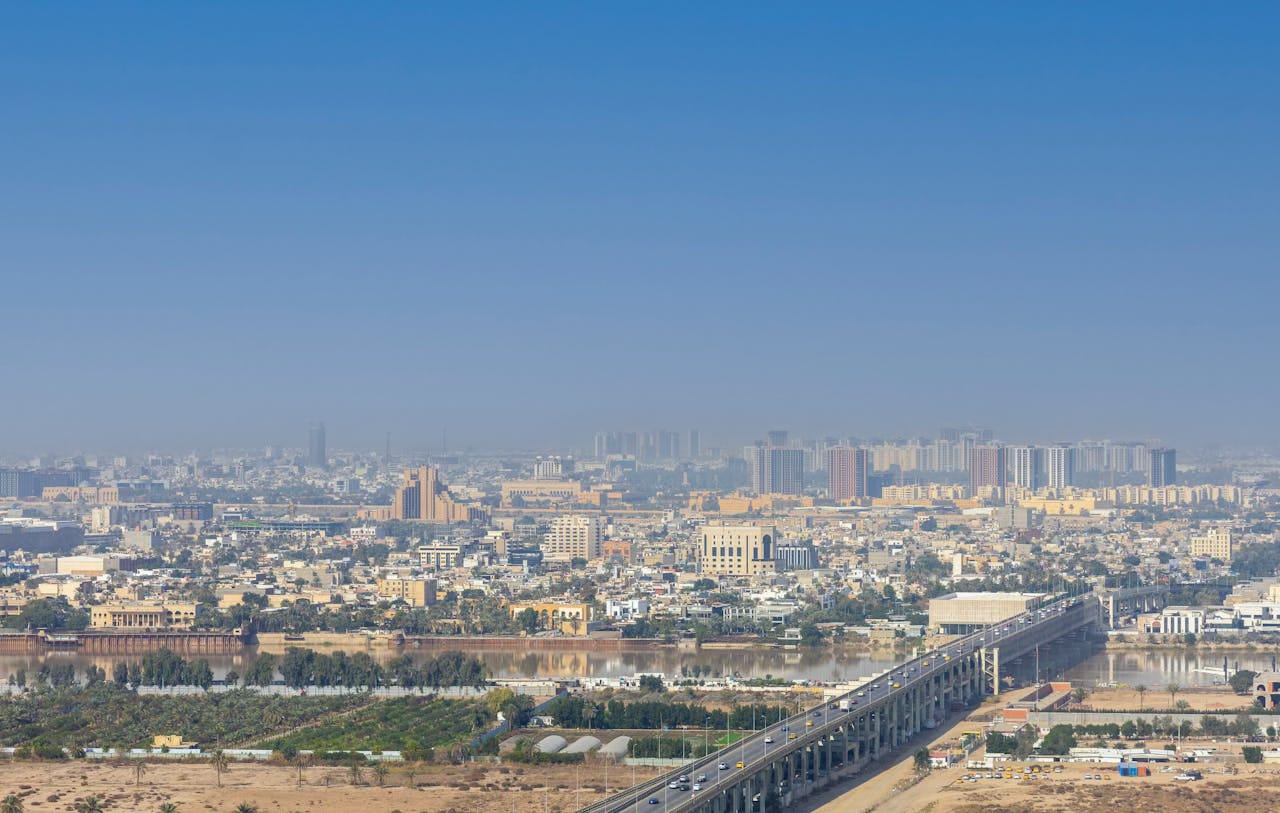
The politics of scarcity at street level
The vanishing pact is most visible in places that cannot move, such as southern Iraq’s canals, the shrinking marshlands, and towns where encroaching salinity pushes farmers off their land. When flows dip and summer heat spikes, several things happen in unison: municipalities ration water, generators groan or falter, and stressed citizens protest. Water trucks become lifelines, handouts, as local authorities face the impossible choice between keeping farms alive or households supplied. Farmers adapt through painful tradeoffs: cutting irrigation, leaving fields fallow, or shifting to salt-tolerant crops that yield less. Urban families, meanwhile, endure rationing and rising prices.
Public anger doesn’t distinguish between climate stress, upstream control, or local mismanagement. It falls on whichever, or whoever, is nearest.
An very narrow opening
Against this backdrop, even incremental diplomacy movements or gains matter. On 10 October, Ankara and Baghdad announced a draft framework on sharing and managing the dwindling flows, which, if formalized and implemented, could start to rebuild some of the previous habits of cooperation after years of attrition (AP). This isn’t transparency, per se, the text is not public, and the headache will undoubtedly be in verification and enforcement. Still, it is something, it signals two important shifts: first, that both capitals now see water as a top-tier strategic issue rather than a technical afterthought; and second, that the costs of non-coordination, of doing nothing and ignoring the crop losses and social unrest, that these are too large to ignore.
What a viable order would require
A lasting framework for the Tigris–Euphrates can’t rely on goodwill alone; it needs rules that fit the new climate reality. Six, to be currently precise. The first step is transparency. Each country must share real-time data on reservoirs and releases through a common system, verified by neutral observers, so that downstream planners aren’t working blind.
Next is flexibility. Fixed water quotas collapse in drought years, and the basin needs verified commitments that rise or fall with actual inflows. Tying shares to the available water each season, not the desired water, turns conflict into calculation, not suspicion and accusation.
Third is discipline on demand, not just supply. Downstream states can invest in small tech fixes that add up to large gains: canal lining, drip irrigation, and urban leak control. Upstream, better reservoir management during heat waves can cut loss from evaporation and keep hydropower timing closer to agricultural needs.
The marshlands and the fight against salinity also have to move from afterthoughts to anchors of the system, as irreplaceable natural capital. Keeping enough flow for wetlands and soil health is not charity to nature, it’s infrastructure for survival.
Finally, the basin needs incentives and recourse. Energy-for-water swaps could balance the ledger, for example electricity or gas from downstream in exchange for water releases at planting time. To manage all this, a standing technical body with quick decision escalation channels could settle disputes before they spiral out into further tensions.
A viable Tigris–Euphrates order would not erase tension, but it could replace some of the current guesswork with trust, and would allow progress to be made on developing a framework fit for the reality of a hotter century.
Why this matters beyond Mesopotamia
The Tigris–Euphrates is not an outlier, rather, it is a preview of things to come. From the Mekong to the Colorado, the situation is that infrastructure-enabled asymmetry is meeting climate volatility and governance gaps, head on. Without adaptive rules, without a shared sense of reality as to where climate change is leading us, upstream control hardens, downstream grievances deepen, and environmental thresholds are crossed. The price is paid in food inflation, human displacement, and political brittleness. The alternative is not kumbaya round the campfire; it is a pragmatic order that is capable of recognizing sovereignty while also working to constrain its more destructive expressions.
A narrow path to rebuild trust
Trust will not be rebuilt with words, with diplomatic communiqués alone. It will be earned in how this plays out, literally, on the ground. If, by next planting season, farmers see water when schedules say they will; if city taps run more steadily through heat waves; if marsh salinity stabilizes. It will also be earned if citizens can see the data and be engaged to understand it. If release plans and reservoir levels are public, intelligible, and audited. If people are effectively connected to the water, to the need for shared management of singular resources.
The vanishing pact failed because it relied on habit and hope. The next pact, if it is to last, has to be legible, enforceable, and designed for a hotter, harsher basin.
Read this / Notice that / Do something
Read this: Turkey and Iraq’s draft water-sharing framework, a slim but timely opening (AP)
Notice that: Iraq’s climate-water risks are systemic. Without rapid adaptation, scarcity cascades into power, health, and food (World Bank CCDR: Iraq).
Do something: A workable pact starts with transparency and efficiency: link flows to real conditions, and fund loss-reduction before expansion (GAP overview).
Previously on GYST: Copper Wars - Latin America’s race to wire the Green Transition
Next up: Token Borders: when crypto becomes a tool of sovereignty