
Tariff truce or tactical reset? What the fragile U.S.–China thaw signals for global governance
The U.S.–China tariff truce is a pause, not peace. A swap of soybeans for tariff relief shows how little trust underpins today’s global trade. Quick deals replace lasting rules, revealing the limits of ad-hoc bargaining in managing a rivalry that still defines the world economy.

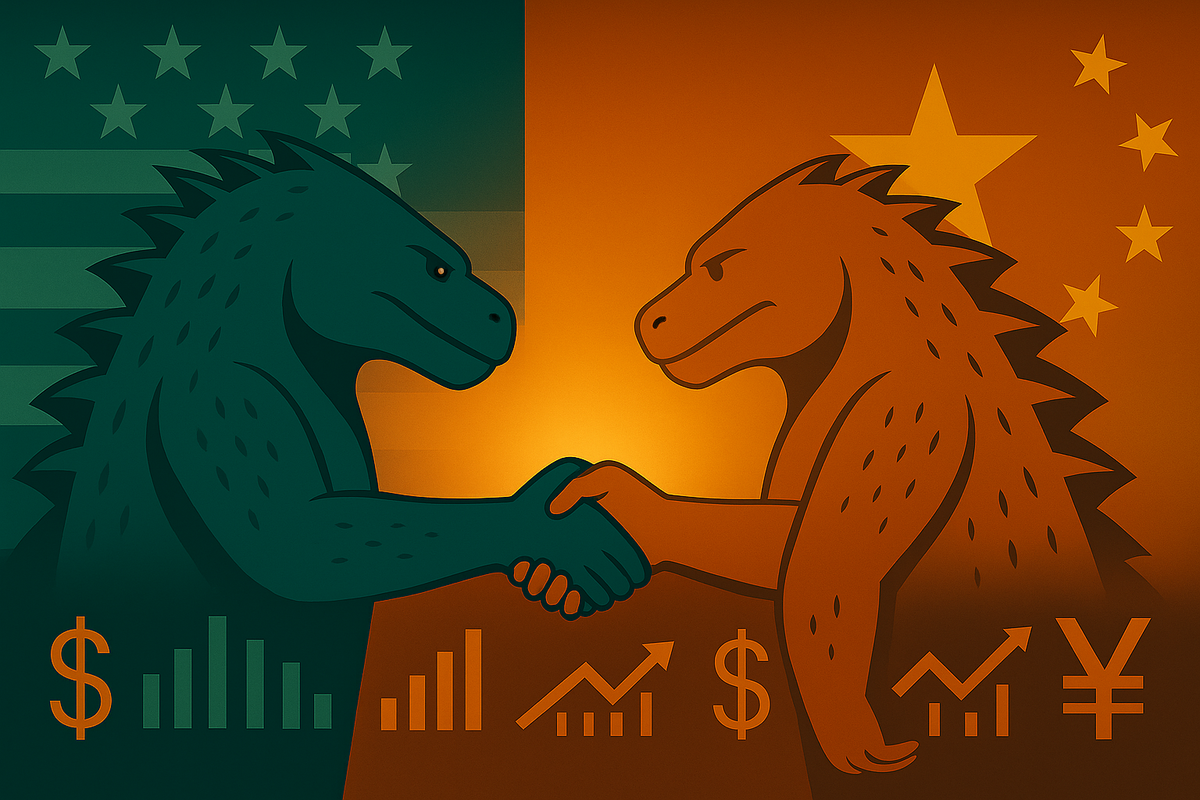
After years of back and forth, escalating tariffs and tightening technology restrictions, China and the United States may be showing tentative signs of trade détente. Not quite a breakthrough, reset, or “normalization,” to be sure, but perhaps a seasonal thaw.
Last week, at the end of October, the presidents of both countries met in Busan, South Korea, and announced a pause on new tariffs and export curbs, coupled with headline steps such as China resuming large U.S. soybean purchases and delaying new controls on rare-earth exports. According to official summaries, China will buy at least 12 million metric tons of soybeans by the end of 2025 and 25 million tons annually thereafter, while Washington will cut several tariff categories by roughly ten percentage points, lowering its overall levy on Chinese imports from 57 to 47 percent (Channel News Asia).
At home, however, Washington’s politics remain divided. Within days of the Busan meeting, the U.S. Senate voted 51–47 to terminate the emergency powers that undergird many of the country’s tariffs, for once a bipartisan rebuke “across the aisle” of the administration’s unilateral trade tactics (Politico). This uneasy mix of fragile truce abroad and what many see as a possible spark of dissent at home (although many are also understandably not holding their breath in anticipation) raises a central question: is the thaw a strategic reset in global trade governance, or merely a short-lived tactical timeout?
A fragile thaw
On the surface at least, the Busan encounter looked like a breakthrough. While somewhat hastily convened, in diplomatic terms, both sides agreed to suspend imminent tariff hikes and to address two persistent irritants: fentanyl-precursor exports from China and U.S. restrictions on rare-earth metals critical to green technologies. The White House, in this current administration, ever eager to show a pretence of strength and success, quickly described the outcome as “historic”. Beijing, as ever with its cards clutched more closely to the chest, used more measured language: “constructive exchanges” were had, yet no formal pact was signed (Reuters Breakingviews).
There were concrete concessions, though these were narrowly transactional. The United States agreed to scale back a flurry of tariffs linked to fentanyl-related chemicals in exchange for greater Chinese law-enforcement cooperation, a hot-button topic widely linked to domestic right-wing voter appeal. China, meanwhile, pledged to delay a planned ban on rare-earth magnets and to resume large-scale agricultural imports, a gesture aimed squarely at easing U.S. farm-state pressure since China zeroed out its purchases of U.S. soybeans in recent months, and comfortably ahead of the 2026 election cycle. Each side was notably careful to preserve its larger leverage: technology export controls, industrial subsidies, and market-access restrictions remain intact. The result is best understood less as a peace treaty, more of a ceasefire.
Markets responded with cautious relief, but the limits to the discussions were quickly noted, specifically the fact that the deal only carries an explicit one-year duration. It defuses the immediate tensions, certainly, but leaves the actual structural confrontation between the two nations untouched: who leads the competition for near-term technological and rule-setting dominance. In that sense, Busan represents a bit of a ‘timeout’, both powers taking to the bench to pause escalation while preparing for the next round. Continuity dressed as compromise.
Domestic politics and the durability of calm
The Senate’s bipartisan vote to curtail executive tariff authority marked, if not a turning point, the sharpest institutional challenge to U.S. trade policy in years. Several Republican senators joined Democrats to argue that using ‘emergency powers’, based on unsubstantiated claims that there was a de facto emergency, amounted to executive overreach. Though the resolution is likely to face a veto, it does signal the extent to which Republican congressional members in particular have been confronted by angry constituents hurt by a unilateral trade war. Business groups have been similarly critical: decades of global supply-chain integration cannot simply be unwound by decree, and capricious barrages of tariffs have created whiplash and uncertainty for industries now fully embedded across key manufacturing nations such as Vietnam, Mexico, and India.
It’s important to note that this domestic turbulence exerts an effect abroad. Beijing’s negotiators have learned to read U.S. politics as part of the ongoing game. By offering a limited pause, let’s say soybeans for tariffs, rare earths for a little restraint, China is effectively testing how much policy stability Washington can deliver before the 2026 election cycle. In return, the U.S. administration gains momentary surface success without making structural concessions that could anger its industrial base. The calculation on both sides is political, not systemic.
Meanwhile, the judiciary is poised to weigh in, and the U.S. Supreme Court is expected to review the scope of presidential tariff powers early next year. If it veers away from its apparent willingness to appease the current administration’s decrees, it will curtail the White House’s discretion, and future administrations could find it harder to weaponize tariffs as bargaining tools. Potentially removing tariffs from the future political arsenal also casts a shadow over the longevity of this détente.
The truce also lands amid broader movement over who gets to write tomorrow’s rules. At APEC, China proposed a new global AI cooperation body, another reminder that its ambitions to participate in and shape global governance now extend from commodities to code, and from tariff bargaining to technology standards. (Modern Diplomacy).
Trade as an instrument of power
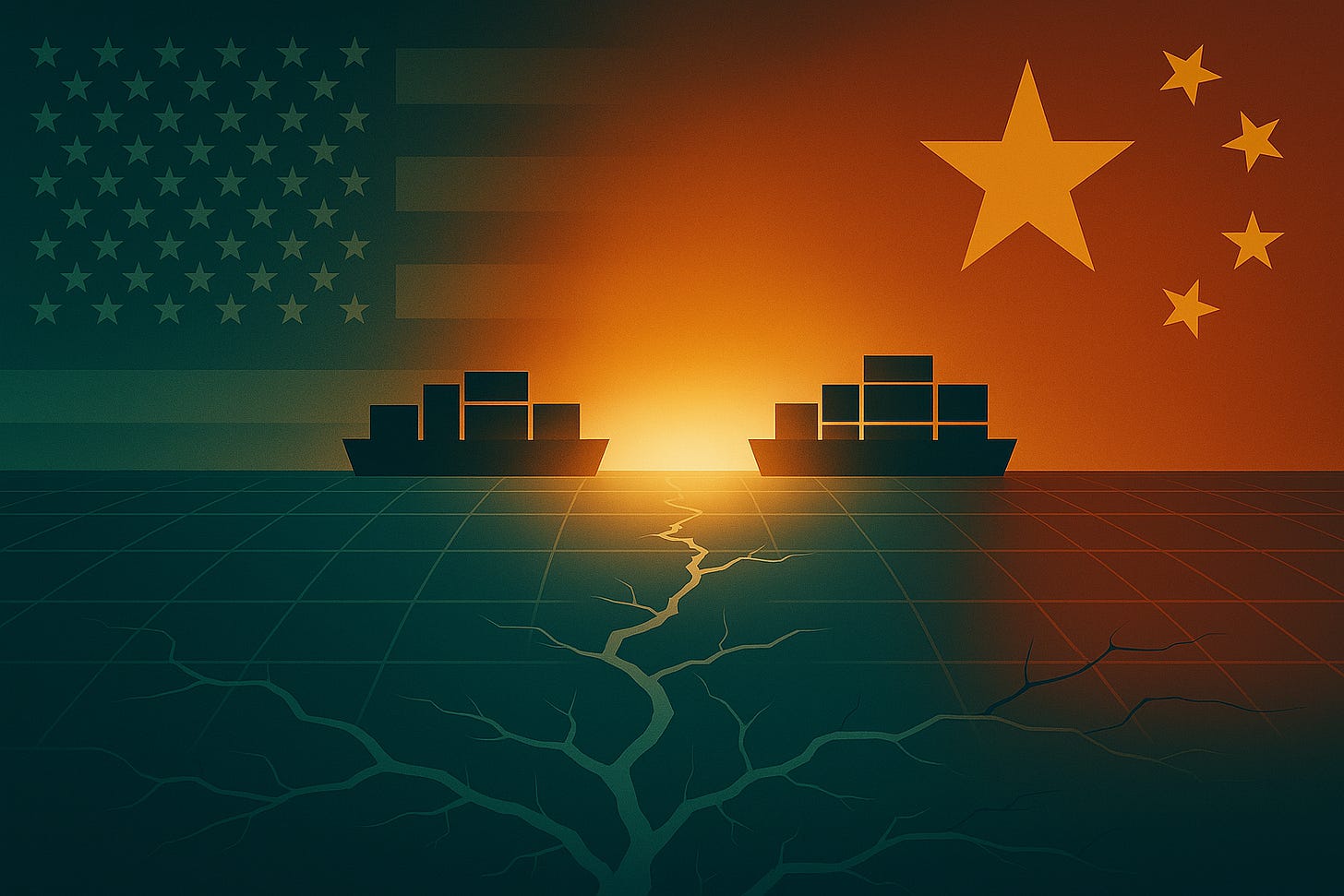
Taking a step back, the Busan truce underscores how trade has become a key tool of power leverage, a blunt hammer rather than a nuanced framework of shared governance. Since 2018, Washington and Beijing have negotiated largely with the weapons of economic coercion, skirting the WTO’s rules-based system with tariffs, export bans, and targeted sanctions. The ebb and flow is evident, each episode of escalation followed by an improvised ceasefire as we see now, trading immediate relief for gains to be spun as symbolic wins to domestic audiences.
While this all feels like describing the momentous clash of two giant kaiju in Tokyo Bay, for smaller economies, this shift is no less destabilizing. The WTO’s latest forecast pegs global trade growth for 2026 at just 0.5 percent, citing “serious risk” from U.S.–China decoupling. Supply-chain diversification has accelerated to hedge against risk, but at a clear cost: building parallel production networks adds expense without reducing dependence, and in any case, those capricious tariffs still discourage long-term investment. The Busan thaw may calm markets for now, yet its one-year horizon all but guarantees continued volatility.
The pattern also weakens global governance in general. Instead of strengthening multilateral norms, both powers are degrading it and opting for a tit-for-tat approach, quick fixes negotiated at the leader level, enforceable mainly by a cycle of retaliation. Institutions like the WTO and IMF have been reduced to bystanders, issuing warnings few heed, and each ad-hoc deal chips away at the governance rules that, however perceived, were there to supply a conditional legal framework.
A calculated pause in Beijing
Beijing is always seen as playing the long game, so this pause is seen as tactical. China’s economy is still dealing with major distress in the property sector and weak domestic demand, so it could benefit from tariff relief and improved export access. However, state media have kept the lid on an exuberant rhetoric, keeping expectations deliberately low. The message is one of prudence, not some sudden rediscovered partnership.
Officials describe the détente, rather unromantically, as a “constructive understanding,” leaving room for reversal if Washington suddenly, capriciously, re-imposes pressure. The one-year suspension of rare-earth export limits on gallium and germanium, for example, is a reversible concession: so if new U.S. sanctions emerge, those controls can return overnight. Beijing is seeking to wield the power of timing, or the calendar, by displaying its generosity ahead of the U.S. election cycle, so it can hedge that the next administration might prove either more predictable or more divided.
It should be noted though, that Chinese policymakers also face nationalist pressure at home: any concession seen as weakness risks backlash from hard-liners in the CCP. The result is deliberate restraint, small gestures to steady the ship without appearing to yield to external pressure.
Détente amid deterrence
Even as soybean and tariff pledges were exchanged, geopolitics crashed the party. In recent days following Busan, U.S. officials have publicly reiterated that any unilateral move against Taiwan would carry “serious consequences”, a stern reminder that this momentary economic thaw in no way equates to a strategic trust. The moment captures today’s dual reality: competition and interdependence moving forward side by side.
And what about the allies elsewhere? Well, the optics in Asia may be a little mixed. South Korea, host of the summit, welcomed the reprieve; while Japan, Vietnam, and the Philippines quietly fear it could diminish Washington’s resolve on its role in regional deterrence. European officials, meanwhile, worry that bilateral deals might erode their own efforts at coordination on semiconductor export controls or future standards for emerging technologies.
The diplomatic cost is real: bilateral deals can breed mistrust among others. When trade truces bypass the existing collective frameworks, they make global rules appear to be driven by power, not agreed principle.
The domestic–international feedback loop
In this sense, the Busan pause may not last because neither side can align domestic goals with the global system it says it supports. In the United States, politics favor quick tariff cuts, the immediate supposed ‘wins’, over the quiet work of institutional repair. In China, the political environment means that state control blurs the line between economics and strategy, cutting out any room for compromise.
What is evident is that both have turned trade into security policy: Washington calls it reshoring and friend-shoring, Beijing calls it self-reliance and resource control. The thaw briefly slows that trend but doesn’t change it in the long term. The result is a loop: trade built on security fears creates a certain distrust, and that distrust fuels more of the same. Each pause restarts the cycle without changing the actual rules.
From truce to trust?
The U.S.–China trade truce is best seen as a controlled burn, cooling the flames without actually rebuilding the house. Both sides know the cost of escalation but lack the trust or institutions to seek to make peace last. Tariffs were cut, commodities bought, and export curbs delayed in the short term, yet the ongoing rivalry over technology, data, and global influence persists. This pause was won through basic transaction, not by a development in trust.
For global governance, two points stand out: trade is again a tool of power, and without strong multilateral frameworks, each deal stands alone. Real, durable reform would mean returning to the rule-making bodies both sides have long avoided, especially the WTO, whose system remains frozen.
So, whether Busan marks a turning point or just a pause depends on whether this tactical reset can lead to institutional repair, something for which there is no indication at present. For now, then, we must live with further ambiguity: a fragile calm between two scrapping giants who can neither fully decouple, nor fully trust.
Read this. Notice that. Do something.
Read this: Channel News Asia’s summary of the Busan meeting’s commitments; Reuters Breakingviews on why the one-year pause only delays a reckoning; and Politico’s analysis of how Washington’s domestic debate over tariff powers shapes the global picture.
Notice that: even “historic” trade pauses now come with expiry dates. A one-year truce framed as victory says less about reconciliation than about how short our horizons for global governance have become.
Do something: watch the institutions, not the handshakes. Real stability depends on who rewrites the rules after this tactical timeout — not who claims credit for the pause.
Previously on GYST: AI and the capacity to govern: Can democracy keep up?
Next up: Asia’s supply-chain pivot: from ASEAN enlargement to the new industrial map