
Europe’s Quiet Defense Rearmament in a Fragmenting World
Europe is quietly rearming. Russia’s war in Ukraine and U.S. hostility are forcing the EU to rethink security, sovereignty, and solidarity. This is more than budgets, it is reshaping European identity in a fragmented world.

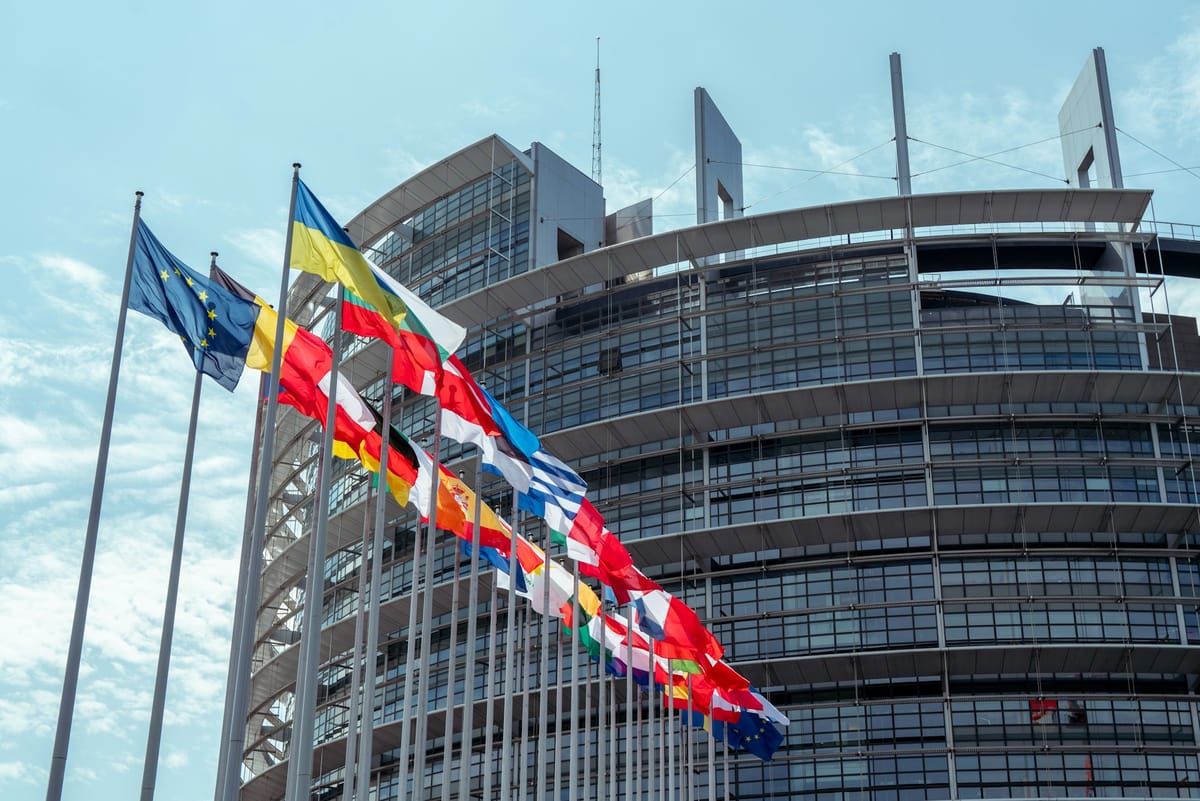
This isn’t just about tanks and jets. Rearmament is changing Europe’s place in the world, and its own collective conscience.
For years, Europe lived off the security guarantees of others. NATO was shorthand for U.S. power, and defense was a back burner issue that governments could safely underfund.
Yes. Those days are over.
In 2025, European defense spending is surging. Some of it is reactive, driven by the war in Ukraine, a literal EU border conflict in a candidate country. Some is forced, shaped by an increasingly hostile U.S. administration that sees NATO less as a community and more as a balance sheet. However, some of it is inevitable: Europe knew it could not outsource security forever. The clock was always ticking.
What makes this shift matter is not just the numbers. Rather, it is the change in European political identity. Rearmament is no longer just about tanks and jets, but sovereignty, solidarity, and how EU citizens understand their place in, at least what feels like, a fracturing world.
The Border War: Ukraine as Catalyst
Russia’s invasion of Ukraine was the jolt Europe could not ignore. It turned defense from an abstract exercise, a budgetary allocation matter, into a growing question of survival. Ukraine, now a formal EU candidate (since 2022), sits on the bloc’s border under fire. That reality alone forces Europeans to think differently about what the EU is and what it needs to defend.
Support for Ukraine has been massive: financial, military, and humanitarian. The EU has committed over $186 billion in aid (financial, military, humanitarian, and refugee assistance) since 2022, and countries like Poland and the Baltic states have provided military assistance well above NATO’s traditional expectations. According to NATO’s 2025 report, more than 20 members now meet or exceed the two percent of GDP defense target, compared to just a handful before the war.
The war has made something abundantly clear: Europe’s security is not just a NATO matter but a European one. If Ukraine falls or falters, the EU itself is destabilized. That consciousness is new, and it has stuck.
The U.S. Administration: Ally or Adversary?
The current U.S. administration has accelerated this shift. With Washington’s rhetoric veering between dismissive and openly hostile, NATO allies face a transactional America. Security guarantees are dangled, not assumed. Defense becomes a bill to be paid, not a shared project.
This posture has shaken European capitals. While the U.S. remains indispensable militarily, its political reliability is in question, so the transatlantic relationship can no longer be taken for granted, and European leaders are hedging accordingly.
In this sense, U.S. hostility is less the cause of rearmament than the accelerant. The EU had begun to debate “strategic autonomy” years ago, and what Washington has done is remove the illusion of time.
A Long Time Coming
Europe’s defense underspending is a long-standing story. For decades, most NATO members ignored the 2 percent benchmark. Security was outsourced while social spending took priority. That bargain worked… well, until it didn’t.
Germany’s Zeitenwende, or ‘turning point’, announced by Chancellor Olaf Scholz in 2022, was meant to be a historic break. Progress has been slow, but Berlin has set aside €100 billion for defense modernization. Poland has gone further, aiming for 4 percent of GDP, making it NATO’s biggest spender relative to economic size. Finland and Sweden, now NATO members, are helping to reshape northern European security.
According to the IISS Military Balance 2025, Europe’s combined defense budgets now surpass $400 billion annually. While this is still below the U.S., the gap is visibly narrowing. What matters more is the trend line: steady upward movement after decades of stagnation. As procurement mechanisms build traction, and as long as commitment remains steady, that trend line should sharpen its curve upward as we move through the coming years.
Beyond Budgets: The Cultural Shift
Money matters, but so does meaning, and rearmament is changing how Europeans think about themselves.
Surveys from the European Council on Foreign Relations show rising public support for higher defense spending, especially in frontline states. Even in countries traditionally skeptical of militarization, the Ukraine war has altered views. Defense is no longer seen as something in tension with a solely pacifist European identity, but increasingly as part of it.
However, this shift raises tough questions. Can Europe sustain welfare commitments and higher defense budgets at the same time, when welfare is traditionally the lowest-hanging fruit to pick from in times of rearmament? Can citizens accept trade-offs in healthcare or education to fund jets and drones? How does a continent long known as a “civilian power” integrate a more militarized self-image? Can it? Will it divide or unite cultural sentiment across a vastly differing collection of Member States?
Whatever the answers, they will shape Europe’s political culture for decades.
Geopolitical Implications
Europe’s rearmament reshapes the global balance. It’s true that, in a multipolar world, Europe’s weight matters more if it is willing to act. The U.S. remains powerful, but its reliability is contested and its external messaging, consistently confusing, may lead to distrust as the most pragmatic course of action. Europe’s investments make it less a dependent junior partner and more an independent actor, if it can coordinate effectively.
For Russia, Europe’s shift is both threat and confirmation. The war in Ukraine has united Europe in ways Moscow severely underestimated. For China, a more assertive Europe complicates diplomatic hedging: matters cannot be constrained to the solely economic, not with the essential dimension of necessary defense. For the Global South, Europe’s choices may show its true mettle: whether the continent is capable of matching rhetoric with real strategic autonomy.
Risks and Contradictions
None of this is smooth. Europe is divided. It always has been. Eastern states see Russia as the existential threat, as experience dictates. Southern states argue migration and the Mediterranean demand more attention. Budgets may rise, but priorities will still clash.
Defense industry lobbying also looms large. Without transparency, spending surges risk feeding contractors rather than actual capacity, and if economic stagnation persists, public patience may ultimately fray to the point of a somewhat fearful resignation. A militarized Europe could alienate citizens if it comes at a visible social cost that denies those citizens the pillars of what they see as essentially European (yes, healthcare and social benefits).
Why It Matters Globally
Europe rearming is not just about budgets, rather, it is about the EU moving from civilian power and pacifist poster child to the world, to strategic actor. This has consequences for NATO, for the U.S., and for the multipolar world order.
Most of all, it is about European citizens. Defense is becoming part of collective conscience, a recognition that sovereignty and solidarity require hard power as well as soft, and ultimately, that consciousness shift may be the most important rearmament of all.
Read this. Notice that. Do something.
Read: NATO’s 2025 defense spending report; IISS Military Balance 2025; ECFR’s European public opinion on defense.
Notice that: Poland is spending 4 percent of GDP, Germany is finally moving, and the Nordics have shifted posture entirely. But divisions remain, especially between east and south.
Do something: Watch where money actually goes. Tracking contracts and procurement tells you if Europe is buying real autonomy or just padding defense industries. Follow opinion polls: if citizens internalize defense as part of their own identity, or even as a collective identity, the odds are good that the shift will stick.
Previously on GYST: Africa’s solar surge showed how distributed power is reshaping politics. Next on GYST: Latin America’s lithium triangle and whether resource states can turn geology into leverage.