
What phase is the global system in now?
The world is not entering a new era of collapse or retreat. It is moving into a consolidation phase—where expansion gives way to constraint, rules catch up to scale, and choices quietly narrow.

The world is not entering a new era of collapse or retreat. It is moving into a consolidation phase—where expansion gives way to constraint, rules catch up to scale, and choices quietly narrow.

Water is shifting from background infrastructure to strategic constraint. Scarcity and volatility are hardening borders, stressing treaties, and creating trade dependencies. The geopolitics of water is less about “water wars” than governance under pressure.
For decades, technology expanded faster than the rules meant to govern it. By 2025, that balance flipped. As systems became too embedded and costly to reverse, governments stopped trusting markets to fix problems later and began setting limits up front.
Governments now frame open data flows as a security threat. Under the banner of sovereignty, rules meant to protect citizens are fragmenting the internet, slowing research, narrowing dissent, and shifting power upward—often without real oversight.
The world no longer resets between crises. As 2025 closes, financial stress, climate disruption, energy volatility, and geopolitical tension arrive at once, turning instability from an event into a permanent condition.
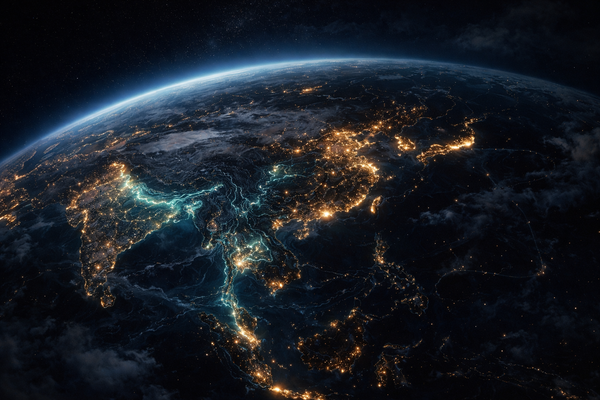
From Himalayan hydropower to China’s industrial north and the Mekong delta, Asia’s water stress is triggering a cascading crisis across energy, industry, and politics. The question isn’t if systems fail — but how far the ripple spreads.

AI’s rise is testing the limits of the physical world. Data centers now rival cities in their thirst for power and water, while chip supply chains strain global resources. The cost of intelligence isn’t just digital — it’s planetary.
Tariffs are back—and with them, a new kind of supply-chain fragility. As governments weaponize trade policy in the name of security, the global economy is reorganizing around blocs, dependencies, and deliberate risk.

Shutdowns, censorship, and undersea fragility are dismantling the world’s last shared space. The open internet is dying—and what replaces it will shape global power for decades.
Global manufacturing is scaling up again. Mega-factories promise efficiency and resilience—but also concentrate power, emissions, and dependency in fewer hands. The new industrial order may prove both efficient and brittle.
Around the world, water is shifting from geography to engineering. Desalination offers relief from drought — but at the price of energy, equity, and environmental strain. The new politics of water are already washing ashore.

COP30 promised urgency but proved how fragile climate unity has become. Adaptation money tripled, fossil language dodged, and power tilting south—all while the clock keeps counting down.
Geopolitics & Power
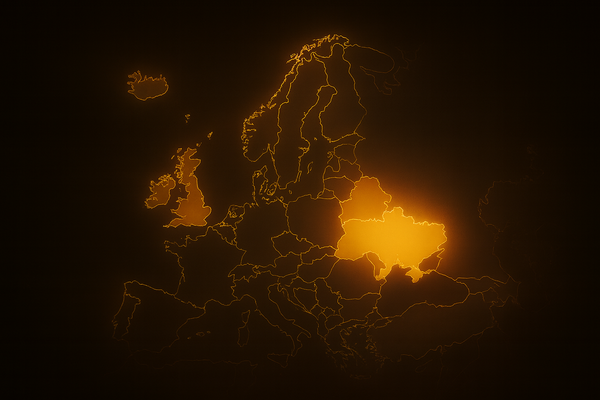
Part II of Europe’s global crossroads examines whether the Union can turn internal reconstruction into real geopolitical influence. As Europe expands, its credibility will hinge on sustained coherence ahead.
Geopolitics & Power
Europe’s old model—security from the U.S., supply chains from China, and cheap energy from Russia—has collapsed. Part I of this GYST series traces how the EU is rebuilding sovereignty in defense, energy, and tech, and what it must do next to become a true strategic actor.
AI governance
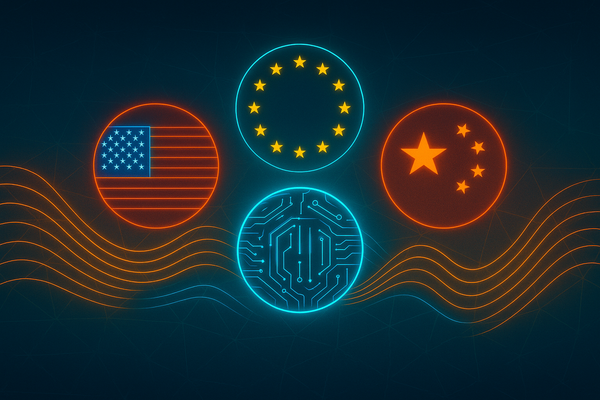
AI is no longer just a technology story – it’s a governance contest. Europe is trying to regulate, America is resisting, and China is advancing with a state-steered model. Three rulebooks are emerging, and the outcome will decide whose values shape the digital future.
Climate & Sustainability
Climate migration already shapes population patterns, but its first sustained pressure will fall on housing, infrastructure, and municipal finance, not only at borders. Movement is real; the overlooked stress point is domestic capacity, not just asylum policy.

Geopolitics & Power
BRICS is no longer just an acronym. With 11 members and nearly half the world’s population, it’s a serious gravitational field in global politics. But expansion also exposes deep internal rifts. The real question is whether more BRICS in the wall makes the bloc stronger, or the cracks wider.

Climate & Sustainability
As insurers retreat from climate-exposed regions, governments are nationalising risk and citizens are paying the true price of adaptation. Who will still be insured in a warming world?

Energy & Resources
Indonesia, Chile and the Philippines are rewriting the rules of extraction. Bans, state stakes, and cautious sequencing each carry trade-offs. Can resource nationalism turn ores into durable prosperity — or just a new dependency?

Geopolitics & Power
Vietnam, Türkiye, the Netherlands – mid-sized nations are stepping up as global rule-writers. From trade pacts to AI standards to climate deals, these “small giants” are filling gaps left by superpowers, using cooperation and credibility as leverage in a fractured world.
The carbon budget clock is ticking, but the story isn’t over. The question is whether our systems of governance can act on what science already knows. Climate scientists recently issued a blunt warning: at current emission rates, the world’s remaining carbon budget for staying below 1.5 °C
Tech & Industry
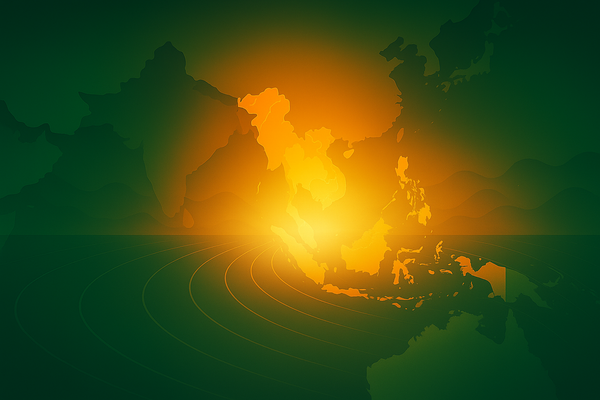
ASEAN’s enlargement and upgraded trade deals are turning Southeast Asia into the new workshop of global manufacturing. Between U.S. friend-shoring and Chinese industrial outreach, a rebalanced regional economy is taking shape.
Geopolitics & Power
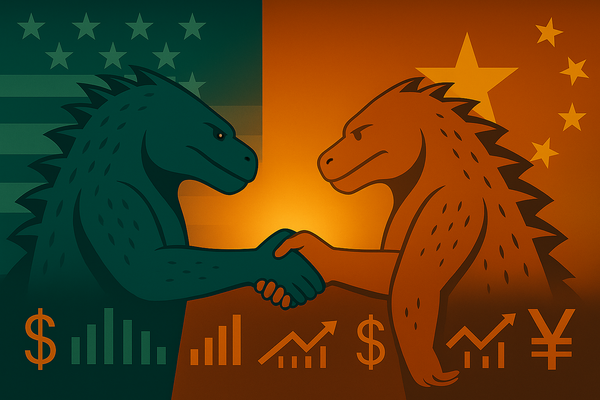
The U.S.–China tariff truce is a pause, not peace. A swap of soybeans for tariff relief shows how little trust underpins today’s global trade. Quick deals replace lasting rules, revealing the limits of ad-hoc bargaining in managing a rivalry that still defines the world economy.
Tech & Industry
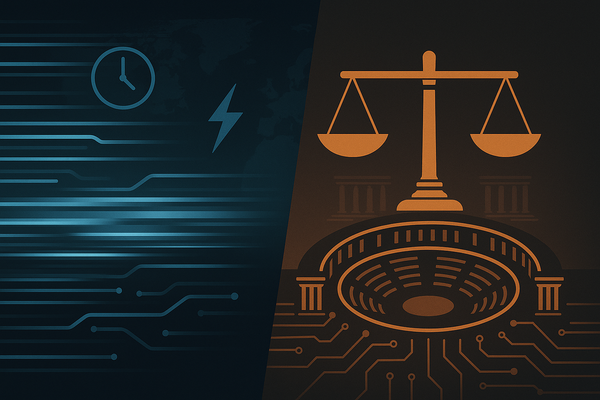
AI is now writing policy, advising generals and routing decisions at machine-speed. Democracies may be playing catch-up — and the key isn’t ideology, it’s capacity.