
The long game of small states: middle powers as the new rule-writers
Vietnam, Türkiye, the Netherlands – mid-sized nations are stepping up as global rule-writers. From trade pacts to AI standards to climate deals, these “small giants” are filling gaps left by superpowers, using cooperation and credibility as leverage in a fractured world.


As the United States and China fixate on rivalry and internal issues, we may be forgiven for thinking that we’re back in a world with a single stage, a standoff between the two biggest powers grabbing headlines. However, they’re not the only ones setting the global rules, and a cohort of mid-sized countries is, notably, stepping into the breach. Nations like Vietnam, Türkiye, and the Netherlands are leveraging their not inconsiderable strategic heft to shape the international norms on trade, technology, and climate, in effect writing some of the new rules of an emerging multipolar order.
Free from great-power baggage, these middle players bring enough economic weight and diplomatic credibility to instead stabilize discrete pieces of the global system. They are pursuing long-term influence through coalitions and institution-building, rather than sheer power projection. Here, we examine how these countries are filling governance gaps in trade agreements, AI standards, and climate diplomacy, and what their long game means for the future of global rules.
Trading in a multipolar void
When the current U.S. administration pulled out of the Trans-Pacific Partnership, it was smaller and mid-sized states who filled the vacuum to salvage a new deal. Against the odds, a coalition including Japan, Vietnam, Canada and others drove the Comprehensive and Progressive Agreement for Trans-Pacific Partnership to completion. The message was clear: middle powers can deliver and even expand an ambitious trade agenda without the patronage of the superpowers. (VOA News).
In the years since, the CPTPP has expanded, adding the UK, courting other applicants, and keeping high-standard trade rules alive (Gov UK). Similarly, ASEAN member states, together with partners such as China, Japan, and Australia, drove the creation of the Regional Comprehensive Economic Partnership (RCEP) in 2020, a move that formed one of the world’s largest trade blocs, even amid escalating U.S.–China tensions (ASEAN). These agreements not only fill the void left by great-power paralysis at the WTO, they also modernize trade rules on digital commerce and supply chains in ways that emerging economies feel they can embrace.
Vietnam illustrates the proactive role of middle economies. Long dependent on global trade, it has become a linchpin in Asian trade networks and a staunch advocate of open markets. It quickly jumped into all the clubs, entering CPTPP and RCEP, signing an EU free-trade pact, and now attracting supply chains diversifying from China. By binding itself to high-standard agreements, Vietnam gains a voice in rule-setting that outweighs its size. The rewards are tangible: preferential market access, foreign investment, and rulebooks that reflect its own development needs.
Other “small giants” have similarly been punching above their weight. The Netherlands, for example, has always been a trading nation at heart and has used its influence in the EU to champion liberal trade policies and digital trade norms. And Türkiye, situated at the nexus of Europe, Asia, and the Gulf, has pursued its own network of trade deals, from Africa to Southeast Asia, to bolster its strategic autonomy.
So, in what way are these moves more than just simple economic self-interest? Because by designing and championing inclusive trade frameworks, middle powers are able to shape how globalization proceeds. They prefer predictability, open norms, and dispute settlement over ad-hoc power plays. And in an era of capricious tariff wars and geo-economic coercion, such rule-based cooperation provides a stabilizing sense of ballast. Middle powers know that if they don’t fill governance gaps, others with more coercive agendas will, and these nations see keeping trade rules fair and updated as essential to their own prosperity and global stability.
The long game, then, for them, is a seat at the rule-making table in a fragmenting global economy.
Writing the Rules of Tech
It’s not only in trade that mid-sized states are stepping up. In emerging domains like artificial intelligence and critical technologies, these countries are asserting influence beyond their size. A few hold tangible leverage: South Korea, the Netherlands, and Taiwan, for instance, control key inputs like advanced microchips and semiconductor machinery, giving them a say in who can develop cutting-edge AI.
The Netherlands’ role is illustrative. As home to ASML, the world’s only maker of certain extreme ultraviolet lithography (EUV) machines, the clever tech that etches the intricate patterns on semiconductors, the Dutch are effectively gatekeepers of the highest-end chip production. In recent years, the Dutch government has coordinated with allies to restrict chip exports to adversaries (Reuters), thereby influencing global tech standards and security through policy choices. In essence, a small European nation found itself writing an important rule: advanced chips should not fuel authoritarian military AI.
Beyond hardware, middle powers are active in the soft governance of AI and data, and many have embraced the EU’s robust regulatory approach as a global model. The Netherlands, for example, has invested in AI ethics and oversight in line with EU norms, and even chairs a European working group on AI supervision aimed at informing global standards (European Commission). By pushing accountability and human-centric design, the Dutch and others help set benchmarks that bigger tech superpowers must heed, or at least respond to. Likewise, Singapore, though smaller in population, is an influential “middle” actor in governance terms. It has piloted AI governance frameworks and data standards across ASEAN, promoting a model that bridges laissez-faire Western norms and the tightly controlled systems favored by digital authoritarians.. Crucially, these states are active on the international scene, leveraging multilateral fora to amplify their voice on tech rules. At a time when the major powers are eroding the efficacy of international institutions, these middle nations actively participate in UN discussions on lethal autonomous weapons, in OECD committees on AI principles, and in global partnerships on AI (ASEAN).
Middle powers “can play a significant role in shaping the future of AI through active participation in regional institutions and international organizations, such as the EU, UN or OECD,” as one analysis notes (Chatham House). Recent AI safety summits and standards meetings have deliberately included a wider range of countries beyond the G2 of the US and China, precisely because those middle players can better broker common ground. They often advocate for norms around privacy, transparency, and interoperability, all areas where superpower rivalry has stalled progress. For instance, European middle states and allies like Canada championed a “Global Partnership on AI” to share governance strategies, even when Washington and Beijing were initially hesitant.
The enduring influence of these efforts may be subtle, but nonetheless profound. By the time great powers converge on AI rules, they may find that a patchwork of guidelines crafted by coalitions of smaller states has already set de facto standards. In technologies that evolve faster than treaties, being the first to articulate governance principles is no small advantage. (We considered this in a recent GYST article). Middle powers are playing the long game here: investing in frameworks that make the digital domain safer and more predictable for all, knowing that even superpowers will eventually need those guardrails, perhaps even to grab on to. Their challenge is to maintain a sufficient degree of coordination, again through fora like the OECD’s AI group or the Global Digital Compact talks at the UN, so that their individual initiatives merge into a resilient web of accepted norms.
So far, their general orientation toward cooperation over competition is yielding incremental but real progress where it’s badly needed.
Climate diplomacy: filling the leadership vacuum
Perhaps nowhere is middle-power leadership more evident, and major leadership more lacking, than in climate diplomacy. When major powers have wavered or backtracked—we’re recalling the U.S. withdrawal from the Paris Agreement under the current U.S. administration that gives open ground for China to stall commitments—coalitions of smaller nations doubled down on climate action. Consider how the Netherlands and Vietnam have partnered to drive climate solutions. The Dutch, knowing a thing or two about water management and possessing a resulting cultural caution with regard to Mother Nature’s wrath, formed a strategic partnership with Vietnam 15 years ago to share expertise on delta resilience and climate adaptation (Netherlands & You). This partnership has helped Vietnam, one of the nations most vulnerable to sea-level rise, to improve disaster forecasting, water management, and sustainable agriculture (WUR/Netherlands–Vietnam Mekong Delta Plan). Next year, Vietnam will host the P4G (Partnering for Green Growth) Summit with Dutch support, an event that “demonstrates Vietnam’s efforts and responsible contributions to addressing urgent global issues,” according to Vietnam’s climate envoy (P4G Vietnam Summit 2025). Such South–North collaboration shows middle powers not just following through on big-power pledges, but bring solutions to the table that are actually designed for on-the-ground needs.
For more insight into the Mekong, see our recent GYST piece.
The Netherlands in particular has made climate leadership part of its foreign policy identity. In 2018, sensing a void in global adaptation efforts, the Dutch government invited world leaders to The Hague to launch the Global Commission on Adaptation (Global Center on Adaptation). This commission, led by figures like Ban Ki-moon and Bill Gates (prior to his recent pivot to focus on “ending suffering”), was explicitly aimed at “bringing scale and speed to climate adaptation solutions” worldwide (European Commission). By convening 20+ countries (rich and poor) and relevant experts, the Dutch helped elevate adaptation, something often neglected compared to emissions mitigation, to a top-tier global issue. They identified roadblocks such as lack of awareness and financing for resilience, and sought to overcome the “lack of global leadership” on adaptation efforts. In doing so, a smaller European country filled a critical gap left by major emitters who prefer to focus on cutting carbon at home rather than investing in greater global resilience.
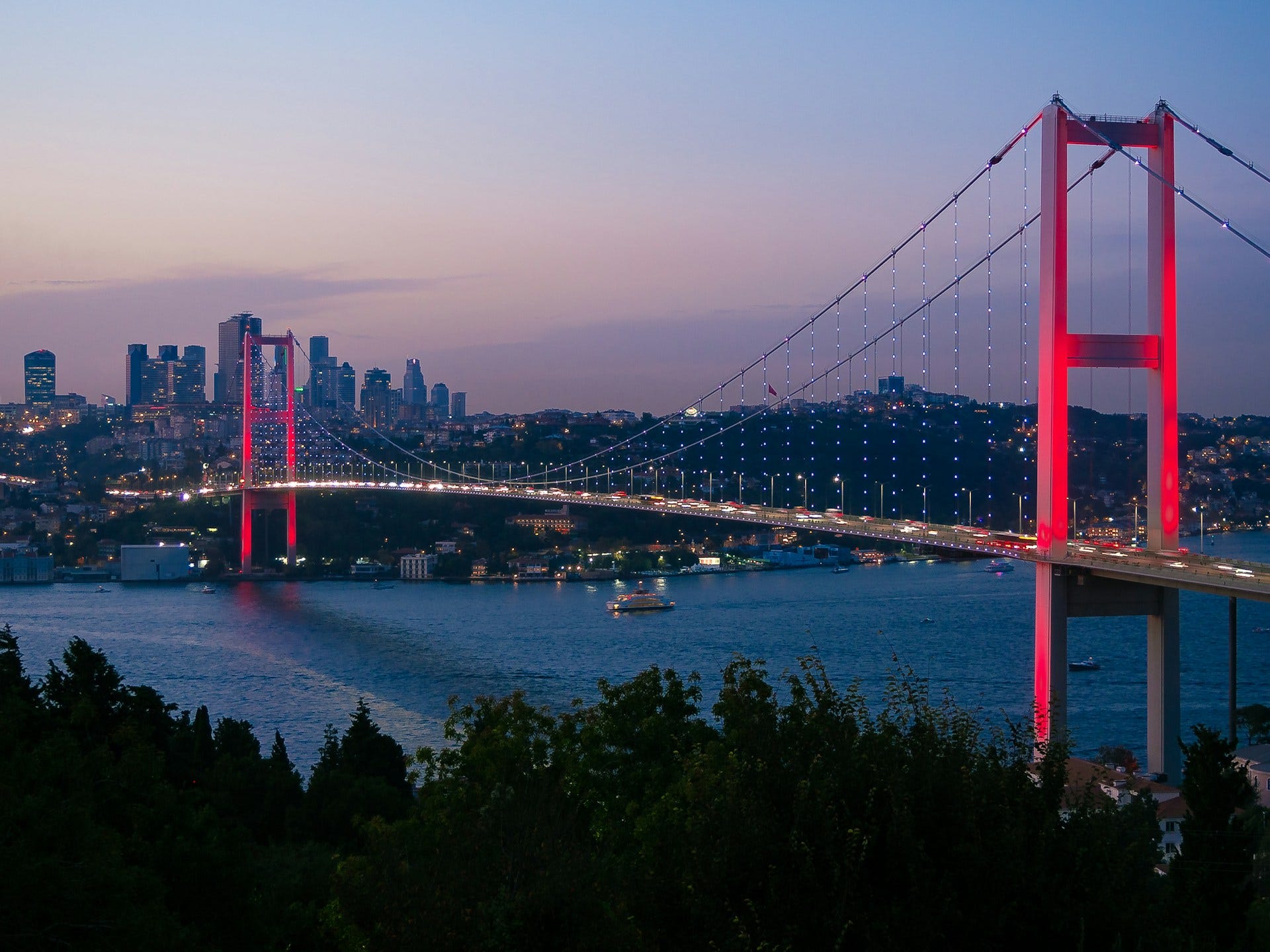
Türkiye has likewise carved out a role as a climate and environmental intermediary, though with a more mixed record. After delaying its ratification of the Paris Agreement, Ankara moved to position itself as a voice for climate justice among developing countries, advocating for more climate finance to emerging economies and participating in initiatives like the Paris-aligned coalition for coal phase-out (though Türkiye itself has not fully committed to ending coal use). Notably, it used its G20 presidency in 2015 to put climate financing on the agenda, and more recently has engaged with European partners on building regional green energy corridors. While not as aggressive as the Netherlands or an island state on climate advocacy, Turkey’s broad diplomatic network and reputation as a convening mediator could prove crucial in regional climate adaptation plans, for example in the Eastern Mediterranean, where wildfire and drought risks are escalating year on year.
Middle powers often bring credibility to climate talks that superpowers lack. For one, they aren’t seen as global policemen or hypocrites, but as nations that also face climate risks while balancing the economy with the environment. This gives them a little more negotiating space to broker compromises. For instance, Indonesia (a G20 economy but a developing nation) has spearheaded the “Tropical Forest Alliance” to protect rainforests while respecting sovereign development rights, navigating a path that big powers alone could not. Chile, though backed by its immense lithium reserves, convened a “Mining and Climate” conference to set standards for sustainable mineral extraction for the green transition. Each of these efforts by a mid-sized country provides a piece of the larger jigsaw puzzle of climate governance that often feels stuck at the top. Bit by bit, they are creating alliances and setting norms, say, on carbon pricing, on climate adaptation finance, on phasing out coal, all pieces that collectively fit together to form a parallel climate leadership structure.
The long game here is ensuring that climate action meaningfully, impactfully continues, and even accelerates. This must be regardless of the political winds in Washington, Brussels, or Beijing. Middle powers are institutionalizing cooperation through venues like the High Ambition Coalition (championed by the Marshall Islands and Rwanda, alongside EU states) and pushing concepts like loss-and-damage funding for vulnerable nations, which finally gained traction at COP27 (UN).
These initiatives help to drive home the tacit understanding that climate change is never a domestic issue alone, that it is always a shared and existential challenge where leadership can come from anyone who demonstrates its real-life effects and shows the will to act. As the financial and human costs of climate disasters rise, smaller states are increasingly the ones who translate abstract goals into practical collaborations with results. They are not waiting for permission to innovate, there is no time left to respect a hierarchy that neglects them. Over time, however, their contributions are accumulating into what might be called a distributed leadershipmodel on climate: a web of committed actors keeping the momentum, even if a few big nodes falter.
The power of the long game
Middle powers think in decades, not news cycles. Vietnam’s quiet trade diplomacy, Türkiye’s middleman bridging efforts, the Netherlands’ persistent norm entrepreneurship: each is a strategic bet on shaping the future international order from the middle out, not from the top down. Sure, their influence often operates on a slow fuse, and a standard set in Singapore or Brussels may eventually become global by force of repeated example. A climate fund seeded by the Netherlands can grow into a lifeline for dozens of countries. A trade pact kept alive by Vietnam and others can redefine commerce across the Pacific. These are enduring impacts that outlast the headlines of great-power summits and tit-for-tat trade spats.
This must also recognize, of course, the limits to what small and mid-sized states can achieve. They cannot unilaterally enforce rules if great powers refuse to play ball, and their collaborative initiatives sometimes struggle for lack of resources or a sense of unified direction. And of course, not all middle powers are benevolent rule-writers, some fold inwards under pressure to focus on narrowly nationalistic ends that can further fragment norms rather than uphold them. However, taken together, the evidence suggests that the international system is already being nudged, coaxed, in a more cooperative, rules-based direction by those in the middle (GCSP). As one former OSCE chief put it, the post-Cold War optimism about a unipolar rules-based world is gone; what comes next “will depend not just on the superpowers’ behavior but also on the capacity of middle powers to cooperate across regions.”
In a world that is, to borrow President Erdoğan’s phrase, “bigger than five,” these countries remind us that influence isn’t only measured in the size of your GDP, it can also be measured in the kinds of alliances you build, the norms you champion, and the consistency with which you play the longer game. The middle powers we’ve looked at here are doing just that, trying slowly but surely to write new rules for an emerging era of globalized and regional cooperation. This is, after all, the ultimate demand placed on us by our self-imposed climate situation. And, if these nations succeed, the benefit will be a more stable, inclusive international order where no single hegemon dominates the pen, or the autopen for that matter, that writes the rules.
Read this. Notice that. Do something.
Read this: 11 Nations Sign Trans-Pacific Trade Deal Without US, a clear example of middle-power rule-making in trade. (Voice of America)
Notice that: Amid U.S. pressure, the Dutch announce new chip equipment export rules: how small states shape global standards through strategic technology policy. (Reuters, 2023)
Do something: Take a look at the Global Commission on Adaptation, the Netherlands’ initiative to accelerate real-world resilience and climate cooperation. (Global Center on Adaptation)
Previously on GYST: The next great test of democracy: governing a warming planet
Next up: From ore to order - can resource nationalism fuel real development?