
Oil Isn’t the Only Game: China, Lithium, and the Age of Real Choice
China’s lithium and clean energy march offer the world real alternatives to U.S. oil dominance. Distributed power is shifting energy politics—beginning with Africa and beyond.

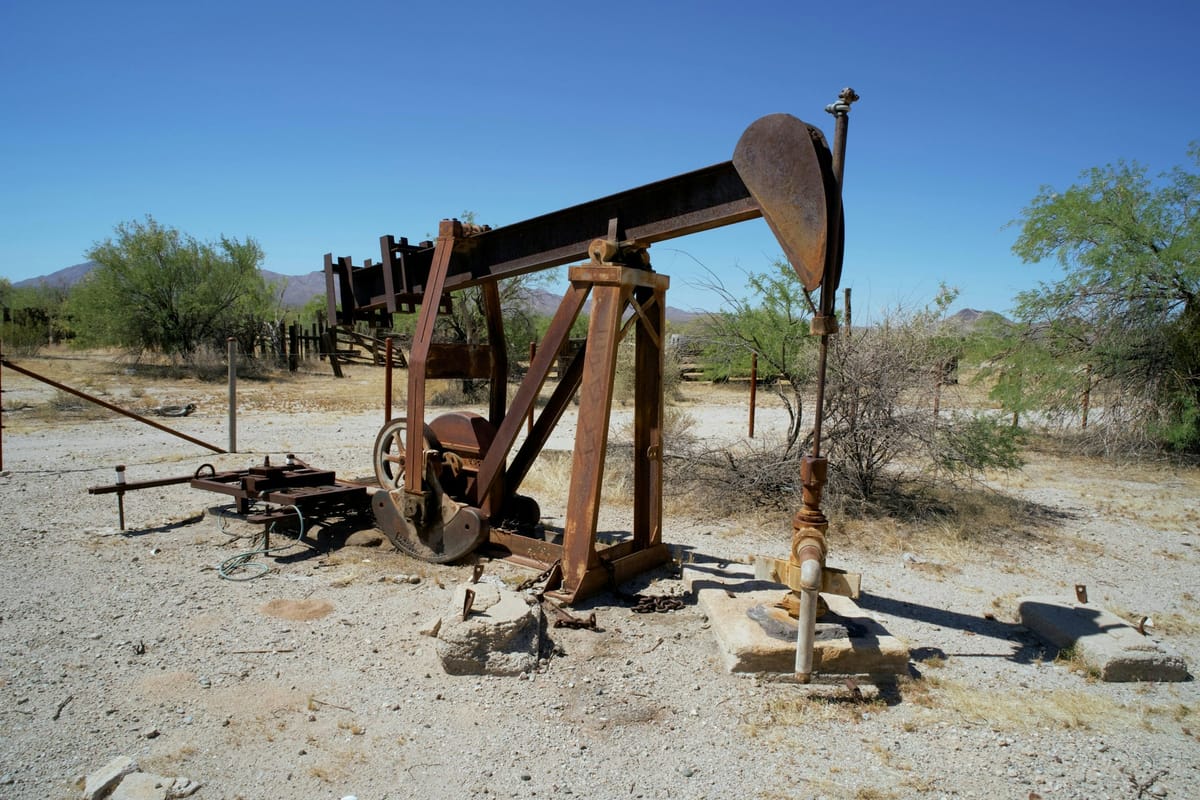
U.S. oil dominance isn’t going anywhere, but global partners now have real choices, and those choices are reshaping geopolitics.
For more than a century, oil has been the world’s default fuel, the axis on which global power revolved. However, as the United States cements its position as an energy superpower, a different kind of contest is unfolding. This is not a story about depletion, but about diversification: the erosion of America’s monopoly over energy norms, and the rise of pragmatic alternatives led by China’s grip, and runaway lead, on the technologies of the green transition.
U.S. Energy Exceptionalism Meets Its Match
America’s shale boom and domestic drilling revolution gave Washington something close to energy sovereignty. Today, the U.S. produces more oil than any other country, exporting both crude and liquefied natural gas (LNG) at scale, according to the U.S. Energy Information Administration.
The current administration points to this as proof of resilience: sanctions-proof, crisis-proof, independent. Yet that narrative of exceptionalism is increasingly questioned, and openly undermined, by domestic turbulence, institutions strained by illiberal governance, electoral interference, and an administration more focused on consolidating power at home than sustaining credibility abroad. Politics aside, it’s a flawed narrative when we consider that, in 2024, wind and solar together generated more electricity than coal for the first time in U.S. history, 17% of the total in fact, compared to coal’s record low of 15%.” (Ember)
For the rest of the world, to put it mildly, the political posture raises doubts. Oil dominance remains intact, but reliability is eroding. Renewables are rising.
Enter China: Not Just Importer, But Industrial Pivot
China remains the world’s largest oil importer. Yet in lithium, batteries, and clean tech, it leads. Beijing controls more than two-thirds of global lithium processing capacity and dominates battery cell production, and this gives its manufacturers a head start that is proving difficult to dislodge, according to the International Energy Agency.
Companies such as BYD and CATL aren’t just producing batteries, they are embedding them in vehicles, buses, and grid storage projects across Asia, Africa, and Latin America. And that visible scale matters: the more batteries China builds, the cheaper they become. Western carmakers talk about “friend-shoring,” but Chinese firms are already saturating markets with affordable EVs, creating consumer pathways that will cement long-term dominance.
The prize is not just in owning mines, but in mastering the entire value chain. Beijing is already there.
The Two-Tiered Global Reception
This industrial pivot is reshaping perception in two directions.
In the wealthier democracies of North America, Europe, and Japan, distrust of Chinese influence runs deep. In a mid‑2025 Pew Research Center survey across 25 countries, just 36 percent held favorable views of China, while 54 percent were unfavorable, though opinion improved in several middle‑income nations. Trade and technology dominance were cited as core anxieties, and even as European automakers partner with Chinese battery suppliers, Brussels frames Beijing as a “systemic rival,” not a trusted partner.
However, we hear a different story in the Global South, where calculus is pragmatic. Chinese technology is affordable, available, and increasingly reliable.
Africa is illustrative of this contention. Ember reports that imports of Chinese solar panels jumped 60 percent in the 12 months to June 2025, reaching a record 15 gigawatts. Even if we exclude South Africa, imports nearly tripled in two years, enough to cover significant shares of annual demand in countries such as Sierra Leone and Chad. In some cases, switching from diesel to solar repaid panel costs within a matter of months.
For many governments and citizens, this isn’t about ideology, it’s about keeping the lights on at lower cost.
Climate, Competition, and the Power of Choice
Lithium itself isn’t scarce. The U.S. Geological Survey estimates global reserves at more than 100 million tonnes, concentrated in Australia, Chile, Bolivia, and Argentina. What is scarce is refining capacity, and China holds the lion’s share.
This asymmetry matters. As the world races toward net-zero pledges, EV adoption and storage technology require more lithium each year. What Chinese firms can do is process, manufacture, and deliver faster and cheaper than competitors, making them indispensable to governments chasing climate targets, especially in middle-income nations.
Western countries, by contrast, wrestle with political divides and protectionist reflexes. The U.S. Inflation Reduction Act (IRA) injected huge subsidies, but the pipeline from mine to battery plant remains slow. In any case, the first-day executive order from the current administration to freeze IRA funding has destabilized progress, despite the recent court rebuttals reinstating it. Meanwhile, Europe experiments with tariffs on Chinese EVs, risking consumer backlash.
The result is a world with real choice. Consumers in Jakarta or Nairobi can buy a Chinese EV today. Policymakers in Washington can posture against Chinese “overcapacity”, but at the cost of slower transitions and higher prices.
What Comes Next and Why It Matters
For Beijing, the lithium pivot is not just about cars. It’s about legitimacy. In a fractured world, the ability to supply affordable, climate-friendly infrastructure is a form of soft power by delivery.
For Washington, oil abundance risks becoming a double-edged sword. Energy independence is powerful, but oil alone no longer defines power. When domestic governance grows erratic, institutions wobble, and electoral processes are bent toward partisan gain, global partners hedge. The result is that reliability, not production volume, is the new currency of trust.
Across the Global South, the trend is clear: governments take the deals that work. From Nigeria’s solar surge to Brazil’s battery plants, choices multiply. The message to great powers is consistent: don’t ask us to pick sides; help us deploy the cheapest power that works.
That sentiment is the new geopolitics. Oil shaped the 20th century through scarcity and leverage. Lithium, solar, and batteries will shape the 21st through abundance and choice.
Read this. Notice that. Do something.
Read: Ember’s 2025 analysis of Africa’s solar imports, the IEA’s review of EV battery supply chains, and Pew’s global survey on views of China.
Notice that: Oil remains dominant, but the next energy order is being written in batteries and solar panels, where China already holds commanding ground. The U.S. still leans on oil abundance as proof of exceptionalism, even as domestic dysfunction erodes credibility.
Do something: When you read about “resource scarcity,” ask: scarcity of what? The real contest isn’t tons of lithium but who controls the refining and tech pathways. Track where investments flow, to Santiago, Shenzhen, Lagos. That’s where geopolitics and sustainability intersect in real time.