
France’s African retreat: who fills the vacuum?
France’s post-colonial footprint is shrinking fast, from the Sahel to the coast. Paris calls it a reset; juntas call it sovereignty. As Russia, Turkey, Gulf money, and China move in, the real test is whether anything replaces the parts that worked: intelligence, logistics, and state capacity.

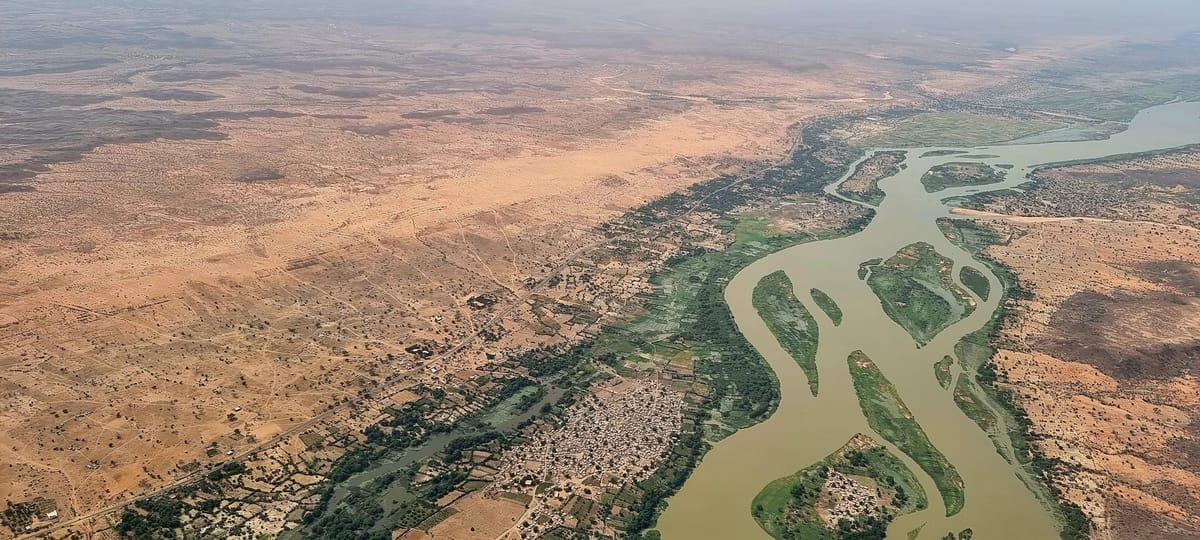
France’s retreat from Africa marks the end of an era. As Paris pulls back, juntas, new partners, and coastal democracies are redrawing the map of power across the Sahel and beyond.
For six decades after independence, French presidents cast Africa as Paris’s pré carré: its backyard. From de Gaulle’s embrace of post-colonial elites to Mitterrand’s love of summits and Chirac’s interventions, the continent was indeed a ‘backyard’ where French diplomacy, security policy, and resource access all overlapped. The informal web of party financing, business ties, and the CFA franc zone was dubbed Françafrique, and it bound African rulers to Paris while also freezing reform. Post-colonial indeed. By the 2000s the bargain was, however, fraying: younger Africans saw an anachronism, a patron turned relic, and democratic aspirations clashed with the assumptions of, well, being in someone else’s backyard.
This relationship needs to be contextualized as taking place largely within the Sahel, the vast, fragile belt between desert and savanna where climate stress, weak governance, and shifting alliances turn local grievances into global security and resource struggles. Terrorist insurgencies here briefly gave the French relationship a new mission. Operation Serval (2013) halted an Islamist advance in Mali; while the subsequent Operation Barkhane became open-ended and unpopular. By late 2023, the “forever mission” ended in humiliation: France’s last troops left Niger on 22 December 2023, closing a decade of Sahel operations and underscoring just how quickly French influence had ebbed. (Reuters).
A retreat, in stages
The tipping sequence is familiar: coups in Mali (2020, 2021), Burkina Faso (2022), and Niger (2023) converted what was anti-French sentiment into a more comprehensive governing doctrine: bases became protest magnets; tricolors came down. Paris tried to set a narrative of assumed control, framing withdrawals as a strategic “reset,” but the order of events told the true story: governments demanded exits and France complied. (Reuters).
So, what has replaced the old posture? We can see a lighter footprint, smaller advisory detachments and “co-run” schools in place of the traditional big garrisons, all codified across West and Central Africa in 2024–2025. In parallel, long-standing hubs along the coast have either been downsized or handed over completely: Côte d’Ivoire and Senegal both moved to end permanent French garrisons and transition to a framework of limited training cooperation. (RFI).
The Sahel’s new alignments
However, where one significant power withdraws, a vacuum is present. And, as physics demands, the vacuum did not stay empty for long. Russia, operating in proxy via the Wagner Group and successor structures, moved in with regime-security packages: trainers, air defense, and political cover. In April 2024, Russian instructors and equipment arrived in Niger just as the U.S. prepared to withdraw, while protests emulated the switch, blending anti-U.S. and pro-Russia messaging. (Al Jazeera).
At the same time, Turkey has stepped in to become a pivotal armorer. Bayraktar TB2 drones filled gaps in Sahel militaries’ reconnaissance and strike capacity and have shaped key engagements. Gulf actors are also increasingly present, financing projects, while China sticks with its longstanding role of Belt and Road era infrastructure provision, funding mines, roads, ports, and telecoms. None, however, replicate what France had once provided: intelligence fusion, logistics enablers, and the laissez-faire attitude to the slow, patient work of strengthening local administrations.
Institutionally, the pieces also split and reshaped. The Economic Community of West African States (ECOWAS) saw juntas quit, opting instead to deepen their own Alliance of Sahel States (AES) in early 2025, and formalizing a political break with the region’s democratic core.
Beyond the Sahel: the coastal pivot
For littoral states, the challenge in question is that of containment: keep Sahel volatility from spilling south. Governments from Côte d’Ivoire to Senegal are reforming their security approach on an à-la-carte basis: maritime and border support, narrowly targeted training, intelligence, surveillance, and reconnaissance (ISR) tools to provide better situational awareness in unduly ‘fluid’ movements over porous borders. Abidjan confirmed the drawdown and handover of French facilities, while Dakar began receiving site transfers in March 2025, culminating in a full withdrawal by mid-2025.
The prominent risk to all this is fragmentation. One year’s “diversified partnerships”, as the phrasing goes, can become next year’s procurement churn without the bedrock of agreed, interoperable systems or shared doctrine. Coastal elites also walk a tightrope: balancing public opinion that often wants less French presence, against military planners who know from experience that without Western logistics and surveillance, the fight against insurgent spillover gets tougher to contain.
Resources and revenue: when security exits, contracts move
Security realignment is never a clean, surgical operation, it inevitably bleeds into economics. In June 2025 Niger nationalized Somair, the flagship uranium mine long operated with France’s Orano, and the workers’ union backed the move. It immediately moved to factor political uncertainty and loss of confidence into uranium, and this foreshadowed wider renegotiations across gold, hydrocarbons, logistics, and telecoms. (Reuters).
The logic for this is straightforward: once troops leave, contracts quickly look vulnerable and it can feel like the vultures were always circling. In Burkina Faso, Chinese mining firms quickly stepped into zones vacated by French-aligned companies, while in Mali, Russian-linked outfits secured gold concessions. Across the Sahel, the political rhetoric of sovereignty pairs with that of resource nationalism, even if the actual governance capacity required to manage new deals is weak. A similar story, in many ways to Indonesia.
Europe’s dilemma
France shrinking back from its prior power projection is also Europe’s problem, since Brussels long relied on Paris’s forward posture to underwrite training missions and development economic bets in the Sahel. With French troops departed from interior hubs, the EU must face the same sense of investment shakiness, and must consider either of two options: step up with politically costly deployments, or pivot to littoral nation partnerships. That means investment first in migration management and maritime security, certainly a less impactful policy when pitted against entrenched insurgency.
The strategic analysis provides a somewhat blunt outcome: Europe needs to better prepare itself, requiring a wholesale reset that balances the emerging norms, the realities on the ground, with a more realistic toolset to act. This means grappling with unsavory partners, investing in intelligence rather than brigades, and rethinking whether “capacity building” is still a viable model to pursue when the partner regimes in question are authoritarian juntas.
The debate in France
This retreat, this retraction, is not just an African story, it is also a French one. Inside Paris, politicians are divided: President Macron may call it a “rebalancing,” but opposition parties frame it as an outright abdication of influence, a willful throwing away of held power. Military officials warn that reducing Africa engagement leaves France blind to future threats, removing a layer of protection, whereas development agencies argue that resources would be better spent at home or in multilateral EU frameworks.
What is clear is that the old bipartisan consensus, that Africa was France’s strategic depth, has collapsed. Polls show limited public appetite for costly overseas missions, particularly as domestic economic pressures and security concerns closer to Europe dominate. Macron’s gamble is that France can maintain its leverage via lighter partnerships and EU mechanisms to bolster them, but the critics argue that Paris has surrendered the initiative to others.
African public opinion beyond the Sahel
In West Africa’s coastal democracies, citizens see a degree of opportunity in diversification. Polling by Afrobarometer shows majorities favor reducing reliance on France, while being open to courting new partners like Turkey, China, and even Russia, although significant skepticism about governance standards remains.
In East Africa, where France has a lighter footprint, the retrenchment is barely noticed, underscoring how limited Paris’s influence always was outside its old sphere. Civil society voices stress that the real measure of sovereignty is whether governments consult their people about new security partnerships, a gap still evident in Niamey (Niger), Ouagadougou (Burkina Faso), and Bamako (Mali), where junta decisions align with regime survival, constituting unconsulted, top-down policy, rather than outright citizen preferences.
Local perspectives (and limits)
On the ground, the departure has brought celebration in Bamako and Ouagadougou, a sense of sovereignty regained, yet communities near conflict zones often report little change and less relief. Violence fills a vacuum rapidly, adapting faster than institutions, and UN data flagged continued rises in attacks in Mali and Burkina Faso through 2024–2025. In Niger, protests outside French and U.S. facilities entwine anti-colonial rhetoric with pragmatic concerns about base-linked local jobs.
The political dividend of expelling France is clear. The security dividend remains hotly contested.
So, what replaces France?
This ‘process’ has, to reiterate, not been smooth or overly structured. This is also why there is neither a single actor nor a full-spectrum model to comprehensively replace the role France played. Russia’s invitation to provide assistance is one that secures regimes rather than populations; Turkey’s drones change battlefields, yes, but not governance; Gulf money smooths projects; whereas China comes to build and buy. Any Western presence, whether French or EU led, shifts to lower-visibility assistance and coastal cooperation. Analysts caution that without the apparatus of solid governance, functioning police, credible courts, and resilient local administrations, battlefield victories are fleeting and insurgencies will simply resurface.
Scenarios: three ways this can break
Three broad scenarios emerge. One is AES consolidation, where Mali, Burkina Faso, and Niger deepen coordination, embed Russian support, and push ECOWAS irreversibly to the sidelines. Violence stays high but contained, the juntas survive, and a semi-permanent alternative pole emerges.
A second is coastal resilience, with littoral states keeping Sahel instability at arm’s length through diversified security partnerships, focused ISR and maritime programs, and political bargains in border regions. France plays only a residual training role, while the external actor mix becomes more multipolar.
The most troubling possibility, however, is wider instability, in which insurgent violence seeps further into Benin, Togo, and Ghana, migration pressures spike, and more coups follow. With fewer Western tools on the ground, crisis response becomes slower and costlier.
The bottom line here is that France isn’t simply leaving; it’s more of an Irish exit, leaving the party quietly, early, and with zero consultation. In this case, the scaffolding of an entire long-term, historic policy approach is being dismantled, leaving a vacuums that will not stay empty, but will be filled by whoever shows up with the right mix of protection, paychecks, and plausible stories.
Read this. Notice that. Do something.
Read this: Reuters on France’s final Sahel withdrawal.
Notice that: Afrobarometer on African public opinion.
Do something: RFI on Senegal base handovers.
Previously on GYST: Indonesia’s nickel gamble and the future of clean tech.
Next up: BRICS, minus the bloc.