Industry 5.0: geopolitics in the age of intelligent machines
Industry 5.0 is not just about tech, but power. As machines and people integrate, the next industrial age reshapes who leads, who lags, and who controls the rules of production.

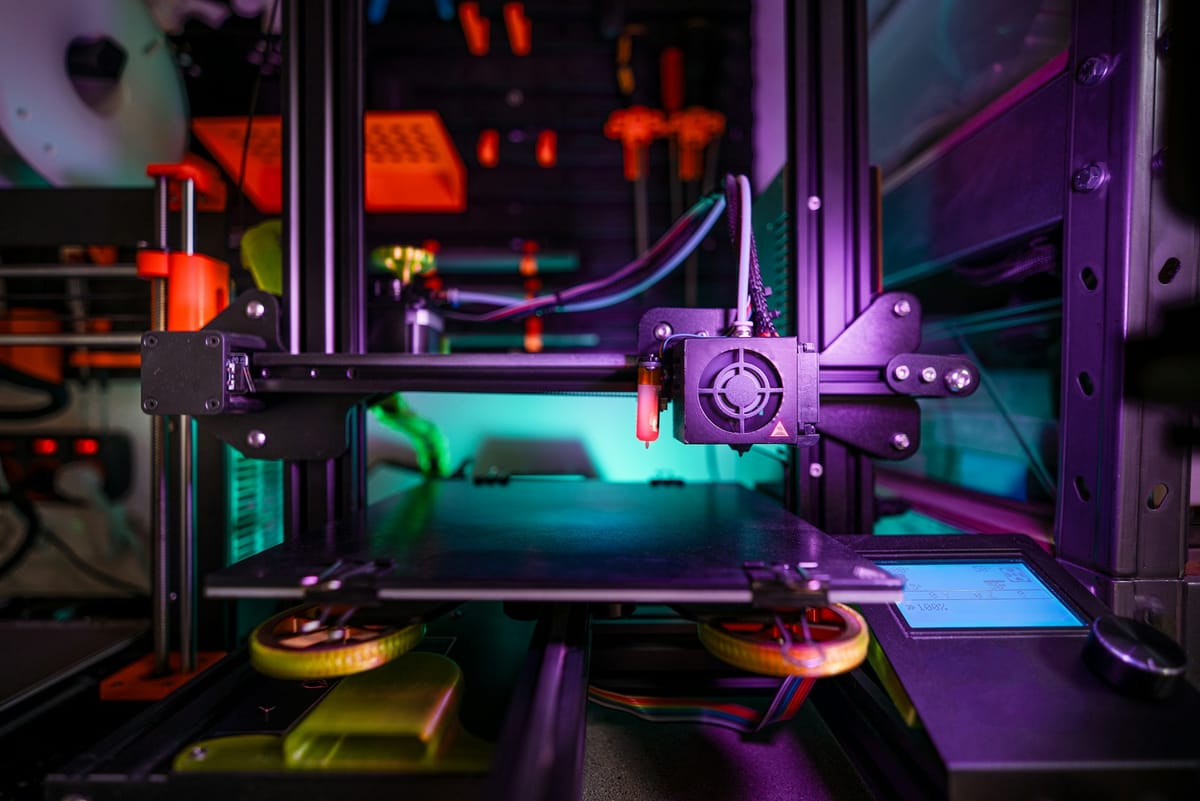
Factories are no longer just about scale or automation. If you haven’t heard the phrase “Industry 5.0”, you will: in boardrooms, government white papers, and investor pitches. It promises a future where humans and machines collaborate, where production is tuned to resilience as much as efficiency, and where geopolitics once again reshapes the terms of global trade.
From steam to smart factories
The “5.0” label prompts the question of the previous iterations. Industry 1.0 began in the late 18th century with steam engines and mechanized weaving. Industry 2.0 arrived in the late 19th and early 20th centuries, when electricity enabled mass production and assembly lines. Industry 3.0, starting in the 1970s, added electronics, computing, and early automation. Industry 4.0, unfolding since the 2010s and where we currently sit, fuses sensors, cloud systems, and now AI into hyperconnected factories.
Now as we arrive at Industry 5.0, this signals a turn: not just more machines, but machines working with people, framed by sustainability, resilience, and geopolitics.
Human–machine collaboration
Unlike the utopian hype of fully automated “dark factories,” Industry 5.0 stresses partnership. The European Commission (EC) defines it as production that “places the well-being of the worker at the center of the process” (EC). In practice, this means the integration of advanced robotics and AI with the element of human judgment, a shift designed to avoid fragility and brittleness in the face of shocks.
Japanese firms call this the cobotics model: machines provide the precision and endurance, while humans provide the dimension of adaptability and problem-solving. This may sound like branding, but it is also geopolitics, since countries that can credibly integrate human skills into advanced manufacturing will claim a greater degree of resilience against disruptions. Think intermittent pandemics, wars, or simply economic sanctions, such as the capricious moves we have experienced during 2025, that do, however, expose dependence on fragile supply chains.
Supply chains after shocks
COVID-19 exposed just how brittle global production had actually become. Remember the Ever Given, the enormous cargo ship wedged in the Suez Canal? An almost comic reminder that a single choke point can stall billions in trade, and that world trading routes still boil down to a handful of these critical locations. Russia’s unprovoked invasion of Ukraine underscored the costs of depending on hostile suppliers, and since then governments have poured billions into “reshoring” or “friend-shoring” supply chains.
Industry 5.0 is the logical progression of this movement. By blending AI-enabled precision with the human element of skilled labor, governments claim they can shorten chains, localize production, and still compete on cost. South Korea’s Ministry of Trade frames Industry 5.0 as a national security imperative, linking smart factories with energy efficiency and export resilience (Korea Herald). The United States folds it into the CHIPS and Science Act (if this is still sanctioned by the current administration), while the EU treats it as part of strategic autonomy.
But slogans only go so far. The real question is whether Industry 5.0 creates actual independence, or just costlier duplication?
China’s dual role
Naturally, China looms the most prominently in this conversation. While it still remains the factory of the world, it is also a laboratory for new approaches. Its “Made in China 2025” strategy, once dismissed in the West, is now in full swing with new AI-enabled production clusters. Huawei’s Ascend chips, highlighted in our recent coverage of on-device AI, also anchor industrial platforms that target logistics, energy, and manufacturing.
Yet China is not simply racing ahead for the sake of ‘being in front’. Labor shortages, demographic decline, and geopolitical pushback complicate its ambitions. The very logic of Industry 5.0, that of blending machines with increasingly scarce human labor, is, for Beijing, both a necessity and a pitch: technology as a “sovereign tool” that can be exported to Belt and Road partners, a mechanism to project external influence and political muscle. For Washington and Brussels, this is a warning sign that industrial standards may well bifurcate, with one set defined by democracies and another by a grouping of China-led ecosystems.
Energy and climate layers
Industry 5.0 is also inherently about energy. Despite ongoing efforts to design more efficient processes, advanced robotics and AI clusters still require massive electricity inputs. As the International Energy Agency has warned, the energy demand of data and digital infrastructure could double by 2030 (IEA). Therefore, the sustainability framing of Industry 5.0 only works if factories are powered by renewables, otherwise the climate ledger gets worse.
Here, the geopolitics of resources reappear. Cobalt, lithium, and rare earths are all essential to both smart devices and industrial robots, and the same supply risks we’ve tracked in Latin America and Africa now loop back into the future of production itself. Everything along the chain is interdependent, and a just-in-time economy cannot function without just-in-time minerals, something that leaves governments scrambling for long-term resource diplomacy.
Who sets the standards
Technology always comes with rules, and rules come with power. Industry 5.0 is being codified through standards bodies, investment treaties, and trade agreements. The EU’s AI Act and sustainability taxonomies are nudging firms toward “human-centric” industry, while China’s Ministry of Industry and Information Technology (MIIT) and related agencies have in recent years issued plans that explicitly support equipment upgrades in high-tech sectors, where funding is tied to standards to broader strategic goals. This reflects an emergent industrial policy logic where sovereignty, security, and state direction are central (MERICS).
This regulatory divergence means that, just as with the furore surrounding the launch and adoption of 5G, firms may find themselves forced to choose: ecosystems that are interoperable in one geography, but off-limits in another. The result is not the smooth, uninterrupted curve of globalization we had come to expect, but a more jagged map of overlapping, sometimes conflicting standards.
Risks of overpromising
History shows us that industrial transitions are uneven. Industry 3.0 rolled out computers in fits and starts, taking years for true adoption to percolate through, while Industry 4.0 remains more aspiration than reality outside the most advanced sectors. Industry 5.0 may well follow this pattern, meaning that not every factory will instantly morph into a smart, green, collaborative site. Undoubtedly, many will opt for near-term gains that preclude transition, and remain underpaid, unsafe, and polluting.
Yet even if we are still sitting somewhere within “Industry 4.0”, the language of 5.0 still matters. It signals what governments and firms want to project: resilience, sustainability, sovereignty. The politics of that projection is what makes Industry 5.0 worth watching, because it tells us where power imagines itself going, even if the practice lags behind.
Why this matters beyond the factory
It’s tempting to see Industry 5.0 as a technocratic story about efficiency, shiny robots, or a seamless synthesis. It isn’t. It’s a geopolitical shift disguised as an industrial upgrade.
Even if you may feel that manufacturing, industry, where “stuff is made” are elements of modern life that perhaps do not intersect with you, factories, after all, are where power becomes material: in weapons, vehicles, chips, and infrastructure. Thus, whoever leads in Industry 5.0 will not only sell more goods, but will also wield the leverage in more effective supply chains, innovative labor models, and impactful climate strategies, the ability to map and measure change that could potentially benefit all of us.
The core lesson? Industry 5.0 is not arriving into a neutral landscape, but is landing in a fractured world order, where states are multitasking: scrambling to secure resources, shaping new norms, and reassuring anxious workers. As with every industrial shift before, it will of course be uneven. Some will be rewarded, others punished, and it will leave behind a map that looks different from the one we started with.
The fifth industrial age is therefore less about factories themselves than about the redistribution of choice: who leads the standards, who captures the value, and who writes the rulebook.
Read this. Notice that. Do something.
Read this: European Commission on Industry 5.0 definitions; Korea Herald on South Korea’s framing; Reuters on Huawei’s industrial chips.
Notice that: Industry 5.0 is being used as both a security narrative and a climate narrative. Whether factories are “smart” will matter less than who controls their standards and resources.
Do something: When you see headlines about reshoring or AI in production, always trace the links to energy and resources. Ask which standards are being adopted and who writes them. The industrial age may be the fifth in number, but it is our current age, thus it is first in urgency for today’s fractured order.
Previously on GYST: The Mekong squeeze, where shared rivers show how climate and geopolitics collide.
Next up: Indonesia’s nickel dilemma, how the EV transition’s mineral backbone exposes both opportunity and dependency.