
Europe’s global crossroads (Part II): unity, leverage, and the quieter power of rules
Part II of Europe’s global crossroads examines whether the Union can turn internal reconstruction into real geopolitical influence. As Europe expands, its credibility will hinge on sustained coherence ahead.

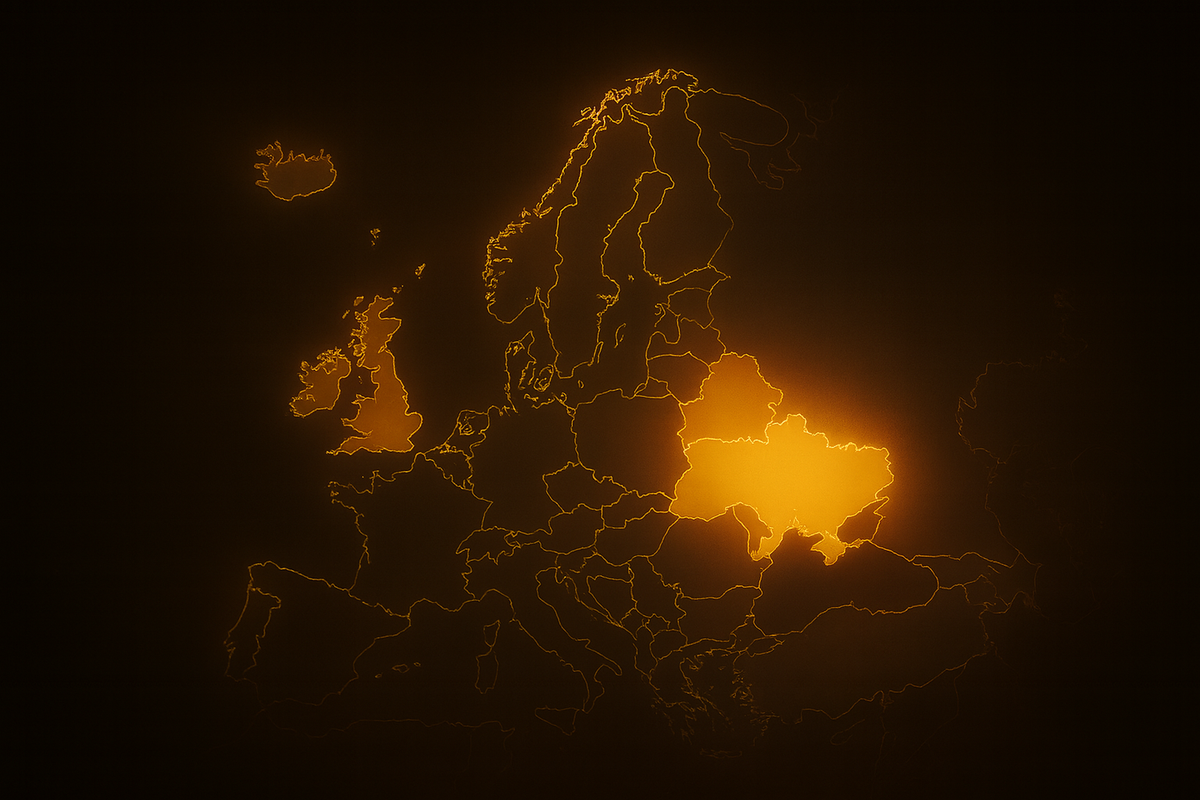
Europe has rebuilt its foundations; the question now is whether it can turn coherence into consequence in a fracturing world.
Europe now finds itself, mid-decade, facing a convergence of pressures that no longer allow a neat division between internal governance and external exposure. The internal reconstruction effort described in Part I on energy sovereignty, industrial resilience, and digital infrastructure, this was necessary, certainly, but not sufficient. The larger question now is whether Europe can convert its relative domestic stability into influence beyond its borders, especially at a time when geopolitical competition is reorganizing, fracturing, everything from supply chains to security guarantees.
(Read: Fracture, not collapse: the return of geopolitics)
The European Political Community (EPC), which began as an experimental forum in 2022, has become one of the clearest signs of Europe adapting its political configuration to new realities. The October 2025 EPC meeting, recorded in the Council’s summary, brought together more than forty heads of state to coordinate on issues that define Europe’s long-term vulnerability, namely: air-defense support for Ukraine, grid interconnection planning, and the shared pressures of inward migration. What made the EPC effective was precisely what it lacked: no treaty, no central institution, no attempt to create the complex interwoven strands of a new bureaucracy. Instead, it functioned as a political perimeter to widen the zone of stability around the Union by treating (non-EU) neighbors as co-participants rather than supplicants. Europe stands to move faster through cooperation than through rewriting its institutions.
This logic extends to the slow, unsentimental rebuilding of ties between Brussels and London following the 2016 Brexit decision. The Windsor Framework, published by the British government, resolved the Northern Ireland protocol standoff that had poisoned cooperation for years, by smoothing out the customs process between Northern Ireland and the EU to maintain trade. Britain’s reintegration into Horizon Europe, confirmed by the Council, restored scientific and industrial collaboration that neither side could easily replace without a certain degree of self-harm.
Let’s be clear: these steps do not reverse Brexit, nor do they attempt to. Rather, they reflect a geopolitical correction: when faced with coercion, energy shocks, or geopolitical pressure, Europe reverts to coherence because further fragmentation now carries steeper costs it cannot afford to pay. This is exactly why sanctions enforcement against Russia once again operates as a trans-European system, visible in both the EU’s consolidated measures and the U.K.’s parallel response. None of this, perhaps would have been imaginable five years ago, but the strategic necessity of the moment has rearranged political incentives. Europe’s sphere of coherence now extends beyond the EU through a network of shared rules, procurement, research, and aligned interests. This is functional, not territorial in nature, and it underlines how, today, function matters much more than traditional ‘form’.
So, if the function, the necessity for appropriate response to the prevailing conditions, is key, then we may ask how durable this model may be? It depends on Europe’s internal political stamina. The 2024 European Parliament elections were forecast as an existential threat to the entire continental project, but the official results (at this simple infographic) proved somewhat more prosaic: a rightward shift, for sure, but not a cataclysmic structural rupture. Populism gained greater visibility, more seats at the table, but not dominance. The political center, though narrower, still held, and governments that campaigned against Brussels quickly discovered that Europe’s strategic reality leaves little room for theatrics. Italy has shifted nominally to the right, yet we saw no break with NATO or diminished support for Ukraine, because the grounded reality of the situation closed those avenues. Europe’s institutions, as they are, exert their own gravity, since ejection from its orbit carries tangible economic, diplomatic, and security costs that voters feel very quickly.
This gravitational pull is also strengthened by the rule-of-law conditionality mechanism, the UE’s tool for blocking or reducing funds to states when their governments undermine judicial independence, misuse public funds, or violate standards. When Brussels enforced it against Hungary in 2022, as recorded in the Council release, it signaled something deeper: Europe’s external credibility depends on how tough it is perceived externally, by its willingness to discipline internal divergence. A union that cannot enforce its own norms cannot credibly argue for a rules-based order elsewhere, and in a world shaped ever more by interdependence rather than brute force, law itself has become a strategic tool.
(Read: AI and the capacity to govern: Can democracy keep up?)
Strategic leverage in an age of constraint
If Europe’s widening sphere of coherence equates to its influence, then growing sovereignty over energy and industry provides its economic spine. The 2022 gas shock forced Europe into a crash course in emergency resilience, but the results were transformative. By 2024, Europe had reduced Russian gas imports from nearly half of supply to under a fifth, enabled by the REPowerEU strategy and an unprecedented acceleration of storage, LNG diversification, and increased coordination across borders. This experience has helped to shift Europe’s policymaking approach: sovereignty now includes molecules, minerals, machines, and manufacturing.
The Critical Raw Materials Act set benchmarks for domestic extraction, processing, and recycling, while the contemporaneous Net-Zero Industry Act aims to establish the requisite clean-tech production inside Europe, from batteries to electrolyzers. These initiatives do not attempt to replicate China’s industrial scale or America’s fiscal firepower; instead, they recognize that European industrial vulnerability is simply a wider geopolitical vulnerability. And in a decade defined by the very fashionable strategy of supply-chain coercion, being able to shape your own production base is a prerequisite for any credible geopolitical role.
(Read related: Asia’s supply-chain pivot: from ASEAN enlargement to the new industrial map)
Nowhere is this clearer than in Europe’s posture towards China. Commission President von der Leyen’s 2023 speech outlining a policy of “de-risking, not decoupling” established a framework for managing economic interdependence without surrendering strategic autonomy. That framework is now being put to work, and the anti-subsidy investigation into Chinese electric vehicles, announced by the Commission, tested whether Europe could defend its industrial base without setting off a chain of political escalation. When this did happen, Beijing retaliated through informal trade pressure, and Europe then escalated the dispute to the WTO, opting to ground its response in law rather than overt diplomatic confrontation.
Europe’s approach to China is a cautious one, neither naïve engagement nor hawkish pre-emptive attack, it is legalistic and defensive, a posture designed for a world where economic leverage is often applied through uneven rules. Europe’s expanding toolkit, including the Anti-Coercion Instrument and the 5G Security Toolbox, reflects the same principle: Europe aims to shape interdependence, not abandon it. So, in this sense, rules have become Europe’s strategic equalizer, compensating for the power Europe does not realistically yet possess: military scale, tech monopolies, demographic weight… by exerting influence through the standards others must follow if, and here’s the caveat, they want access to the world’s largest single market bloc.
(Read: Pocket power: how China is rewriting the AI rules)
Europe’s regulatory reach shows up in the places where markets and security now overlap. A good example is its approach to telecom security, where it pushed high-risk vendors out of 5G networks by setting strict standards operators had to meet, rather than issuing outright bans. Its digital competition rules forced the biggest platforms to change their business practices, ones that were shaping entire markets; and its trade instruments now give Europe a way to respond when partners use economic pressure for political ends. This is a straightforward pattern: Europe shapes behavior by defining the conditions of access, so in a world where infrastructure, data, and supply chains carry geopolitical weight, rules become a practical form of power, ones that are quiet and, yes, quite technical, but still, hard to ignore.
Where Europe’s credibility will be decided
If the first test was internal governance and its second was strategic coherence, then Ukraine represents the third and most consequential: the test of Europe’s endurance. Everything it claims about sovereignty, territorial integrity, and rule-based order converges in the ultimate fate of Ukraine, and overt European support, shown in its candidate status in 2022 and the opening of accession negotiations in 2024, were political signals, but not endpoints. What matters now is whether Europe can sustain military, economic, and industrial support at a scale that meaningfully shapes the war’s trajectory, while Washington continues, in the aftermath of the latest ‘peace plan’, to provide dwindling support.
(Related: Tariff truce or tactical reset? What the fragile U.S.–China thaw signals for global governance)
To this effect, the European Peace Facility has funded ammunition, air-defense systems, and logistics; while reconstruction planning has begun, including the controversial but legally grounded proposal to use profits generated from frozen Russian assets. However, the strategic hinge lies in the stark reality of industrial capacity. The fact is that Europe can no longer rely on American stockpiles or emergency procurement, or indeed any unwavering, firm commitments, not with such a capricious administration currently in power. Increased intra-European cooperation is key, and the emerging co-production of shells and armored vehicles in Poland and the Czech Republic marks the beginning of a European defense-industrial base calibrated not, this time, for a crisis response, but for sustained conflict readiness.
This matters in no small part because Ukraine is not only a battlefield, it is the very proving ground for Europe’s emergent geopolitical identity, if there is to be one. If Europe sustains its support, through the rigorous tests of budget cycles, electoral volatility, and pressure from external actors, then it stands to emerge as a more consequential geopolitical actor, perhaps more than at any single point since the Cold War. Conversely, if it falters, then everything in Europe’s rhetoric, its identity narrative, its brand, about values, stability, and rules-based order will ring very hollow, accelerating an inexorable drift toward a world governed by coercion and spheres of influence.
Beyond the battlefield: Europe’s wider instruments of influence
Ukraine will also determine whether European enlargement can regain its credibility as a strategic instrument, for the integration of a large, war-torn state is not only a technical challenge, but a deeply political one requiring fiscal reform, institutional adaptation, and a shared understanding among member states, at the diplomatic and down to the cultural levels, that security now begins at Europe’s outer rim, not its inner core. This is why Ukraine is the hinge of Europe’s future, since its success would redraw Europe’s political map in a way that strengthens the continent’s leverage. Its failure would be untenable, revealing Europe’s structural limitations more brutally than any internal crisis could.
Beyond Ukraine, we must note that there are other important avenues of European influence, spread through the export of governance models, or the rules-based necessity. The EU–Chile and EU–Mercosur agreements embed climate provisions aligned with CBAM; Europe’s digital partnerships with Japan, Singapore, and India extend its data-protection and cybersecurity principles across regions that increasingly stand to shape global digital norms. And the Global Gateway initiative extends infrastructure financing tied not to political loyalty but to transparency, sustainability, and regulatory alignment.
None of these are glamorous tools, and they rarely generate headlines, but they represent the quiet architecture through which Europe influences outcomes in a more fractured, multipolar world. Europe’s comparative advantage is not glitzy force projection, rather, it is a staid predictability, like knowing the world can stop for fifteen minutes each afternoon for coffee and cake. A baked analogy, perhaps, but in a world defined by systemic shocks, from pandemics to supply-chain disruptions to ever-increasing extremes of climate disruption, predictability has become a geopolitical asset in its own right.
What Europe must prove next
Let’s finish with a neat summation: the durability of Europe’s model will depend on three key tests.
First, whether its industrial and defense capacities can be scaled fast enough to match geopolitical demands. Second, whether its internal mechanisms, those for migration, rule-of-law enforcement, and fiscal stability, can withstand political stress. And third, whether Europe can frame the climate transition as a source of growth, the biggest potential driver of shared growth, rather than the road to politically divisive austerity.
If Europe passes these three tests, it will remain one of the world’s stabilizing poles, exercising its influence through coherence and rules. If it fails, it will drift into irrelevance, not through collapse but through slow erosion, and we will see a continent that underestimated how quickly the global operating system was being rewritten around it.
Read this. Notice that. Do something.
Read this: The European Political Community’s October 2025 outcomes: a snapshot of how Europe is widening its political perimeter through coordination on air defense, energy grids, and migration.
Notice that: The EU–U.K. Horizon Europe association decision: a concrete example of Europe’s functional (not ideological) re-alignment, rebuilding scientific and industrial collaboration after years of political estrangement.
Do something: Track Europe’s support for Ukraine through the European Peace Facility, the mechanism that will ultimately reveal whether Europe’s talk of “strategic responsibility” becomes durable capability or evaporates under pressure.
Previously on GYST: Europe’s global crossroads (Part I): from outsourced sovereignty to strategic agency
Next up: COP30: Staying the course or stalling out?