
Chokepoint diplomacy: how China turned minerals into leverage
China’s new export controls on key minerals are both retaliation and long-term strategy. As the U.S. and its allies scramble to secure supply, Beijing is shaping a new world order through the politics of resource dependence.

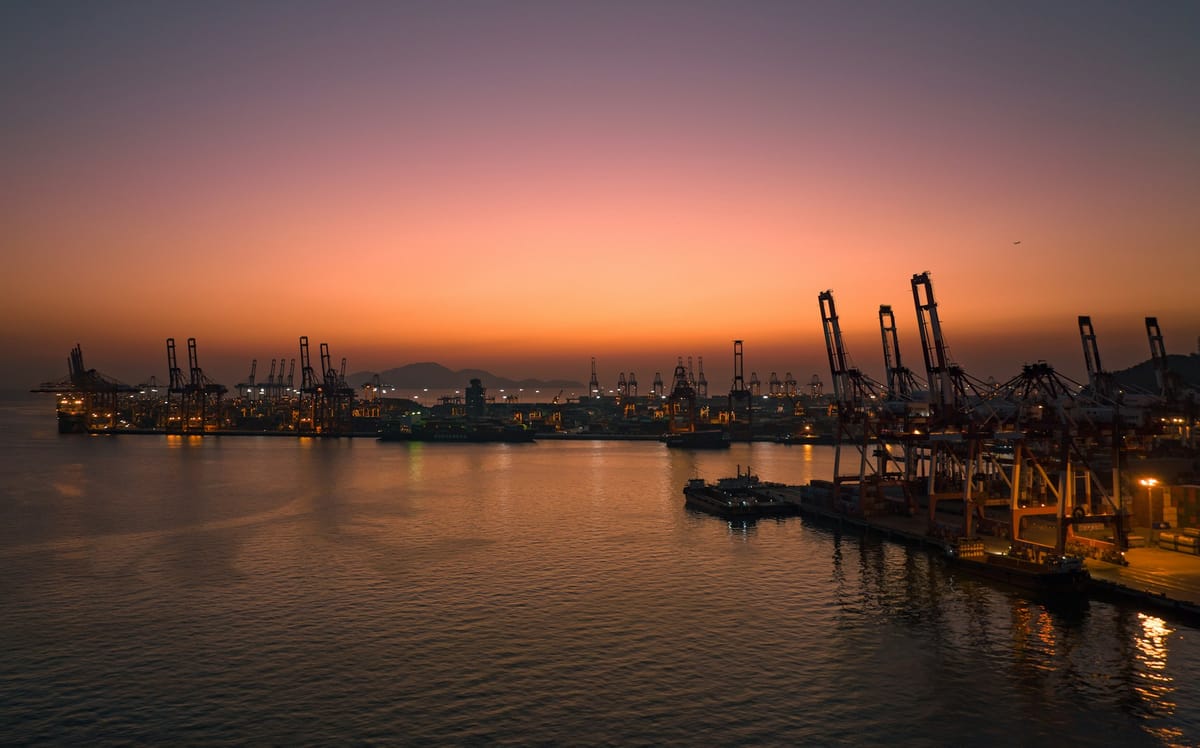
Beijing’s latest export controls are more than tariff retaliation; they mark the rise of a resource-based world order.
When China announced new restrictions on exports of graphite and other key minerals this past week, headlines framed it as the old diplomatic tit-for-tat, a reaction to fresh U.S. tariffs on Chinese electric vehicles and batteries. While this may be true to an extent, the move also reveals something larger. What looks like retaliation is, in fact, consolidation.
At first glance Beijing seems to be tightening its grip in anger, yet what we are seeing is design. The specific minerals in question, ranging from rare earths and gallium to lithium precursors and graphite, form the wiring of the energy transition and the digital economy, and direct market control over them means leverage over the industries that are defining the next century, namely, batteries, chips, renewables, and defense.
From trade war to materials war
Look back and this is a pattern that has been building for years. China is already the dominant player in the processing of most critical minerals: over 60 percent of lithium refining, 70 percent of graphite, and a whopping 80 percent of rare earths. Its strategy, begun long before the U.S. started ‘retaliating’ with tariffs, has been to own the crucial middle section of the supply chain, the refining and separation stages that perform the alchemy, turning raw ore into usable materials for the products that drive daily life.
The result is a quiet form of deterrence, since each new Western trade barrier, tariff, or punitive action risks provoking a mineral-based counter-measure. When Washington limited chip exports, Beijing curbed gallium and germanium, needed to make those very chips. Now, facing electric-vehicle tariffs, it is twisting the screws on battery inputs. So, yes, an elevated tit-for-tat, but with intention, not plain reaction.
The cycle is becoming systemic: it is the weaponization of the very interdependence that has driven decades of globalization, open market laissez-faire economics, and fueled China’s return to prominence.
The latest controls extend licensing requirements for synthetic graphite, absolutely essential to the anodes in EV batteries, and tighten scrutiny of exports to both the U.S. and the EU. Officials described the measure as “necessary for national security and industrial security”, a rather telling phrase, shouting out loud enough that minerals are firmly no longer merely factors of trade, but are sovereign assets. (Bloomberg)
Western policymakers are now seeing that this is the clearest signal yet that global trade has entered a new phase, one where economic interdependence is actively managed as a political tool, not simply as a factor of implicit trust in a trading relationship. For decades, the assumption was that open markets kept peace, and this was largely true of the Beijing-Washington relationship following the former’s accession to the WTO at the start of the century, and swelling U.S. commercial inflows into China that helped drive economic evolution.
Now, and with a China that has recently, finally, cast off its WTO-aligned ‘developing country’ status, strategic materials are being governed as sovereign assets, by the logic of scarcity and precaution. Even the nominal allies are hedging: the EU’s new Critical Raw Materials Act establishes sourcing quotas that purposely reduce exposure to any single supplier; Japan is busy stockpiling rare earths; and India, once the marginal player, has begun to position itself as a more politically neutral processing hub, ready to serve both Western and Asian demand.
Three per week. Get the GYST.
The SCO backdrop
The announcement came just days after the Shanghai Cooperation Organisation (SCO) summit in Tianjin, where China and Russia emphasized “strategic resource coordination.” Support came from the delegations of Iran, Saudi Arabia, and several African observer states, all echoing the same theme: autonomy over extraction, processing, and pricing.
Within that forum, Beijing, as host and overt leader, extolled an export policy that reads less like a reaction and more like a signal, an open message, an invitation, to the Global South that resource sovereignty is the new common cause. Perhaps another round of ‘let the business do the talking’, but this time far more strategic and slotting into a broader re-wiring of the global economy, one in which raw materials and their refining routes are the key factors redrawing the geoeconomic alliances.
The South China Morning Post framed it aptly: “a strategic move to safeguard industrial upgrading and reduce vulnerability to external shocks”. That line captures Beijing’s logic quite sweetly: what the U.S. has been calling “decoupling”, also to drum up nationalist sentiment at home, China simply calls “insurance”. (SCMP).
The SCO summit spoke to actions that will underline that messaging. Delegates from Kazakhstan and Uzbekistan proposed a shared “minerals corridor” linking Central Asia’s vast deposits to Chinese and Russian refineries, bypassing Western intermediaries entirely; while African observers floated similar language around joint beneficiation — mining industry jargon for processing raw minerals locally instead of exporting them unrefined — and technology transfers. The pattern mirrors how the BRICS+ bloc has framed its economic vision, its break away from the U.S. and West’s historically dominated norms: production and processing at home, value retention within the South, and settlement in local currencies.
In effect, China’s chokepoint diplomacy is being reframed. ‘Chokepoint’ is a little too reactive, it is instead an emerging doctrine of mutual resilience, one that contrasts, on the surface at least, with what many have noted as the approach of the West: conditional aid and extractive investment policies. For resource-rich states wary of the strings that come with the IMF purse, or the additional fiscal pressures of conforming to Western-mandated ESG regulations, Beijing’s model looks pragmatic, even liberating.
The leverage of dependency
Analysts at the Center for Strategic & International Studies (CSIS) describe this dynamic using the “chokepoint diplomacy” moniker, the use of market dominance to shape political outcomes without resorting to open confrontation. However, it is not outright embargo, but elasticity, constricting flow just enough to make rivals feel the pinch, the cost of resistance. (CSIS).
Put plainly, this strategy is working because the current alternatives are thin. The U.S. and EU have launched critical mineral partnerships and domestic refining initiatives, but most remain years from scale. Simply building smelters doesn’t happen overnight, this is a complex and fraught venture that requires environmental clearance, energy security, and long-term capital vision. Bluntly: slow, expensive, and politically sensitive.
Meanwhile, China’s command economy, unencumbered by red tape, can shift supply overnight. Hold a shipment in Tianjin and a factory in Texas grinds to a halt. The leverage isn’t at the port; it’s in the paperwork.
And that leverage has already shifted corporate behavior, as Western automakers and battery producers quietly reroute procurement through third countries to maintain access to Chinese-processed materials. Meanwhile, Gulf sovereign funds have stepped in to finance joint ventures in Africa and Southeast Asia, a move that positions Riyadh and Abu Dhabi as brokers in the minerals trade. The Gulf’s model echoes its ‘middle man’, OPEC-era pragmatism: profit from scarcity, but stay neutral in the rivalry.
For Washington and Brussels, this erosion of previous influence and dispersion to new players complicates decoupling, since no single country can replicate the Chinese integrated supply web that sits at the heart of global trade. Even if mining initiatives take off elsewhere, the middle section of the value chain, the processing, still converges in Asia. The long-term contest, therefore, is not only about who mines, but who writes the industrial standards and sets the prices.
The Global South connection
For developing nations, this emerging dynamic doesn’t necessarily come without warning. Sure, many resource-rich states are aligning rhetorically with China’s sovereignty message, hoping to capture more value by processing at home. Indonesia’s nickel export ban became the template; while Zimbabwe has followed with lithium and Chile is seeking greater public control over its mines. But dependence cuts both ways. Chinese investment dominates new refining projects from Lusaka to La Paz. The Belt and Road has quietly morphed into a “Belt and Mine,” carving out global resource corridors that bind partners through the influx of investment capital and the ensuing off-take agreements.
At the same time, and to soften what might otherwise look like old-style resource colonialism, Beijing is courting these same states through the SCO and BRICS+ platforms, promising technology transfer and shared industrialization as part of the deal. Whether that yields actual national empowerment and commercial autonomy for states, or if it leads to entanglement, remains unclear, but the narrative of this as a post-Western resource order is gaining traction.
So it follows that this geopolitical courtship is starting to reshape diplomacy itself. Development summits now open with talk of supply chains, not aid. African finance ministers increasingly discuss refinery tenders alongside debt restructuring. Even Latin America’s lithium triangle, long a fragmented market, is exploring cooperative pricing mechanisms modeled loosely on OPEC.
This is a clear signal of change, that resources are the new language of alignment.
The new resource order
The deeper shift here is structural, and the grand irony (or simple logic) is that while the 20th century’s oil shocks defined geopolitics through scarcity of energy, the 21st will be defined by the scarcity of materials that make the clean energy transition possible. This is the simple linkage of pressing demand with the realities of supply, just in a new guise. And just as OPEC once wielded that political power through production quotas, China now wields it through processing.
Unlike oil, however, these resources are not fungible commodities, they are not interchangeable and uniform in value. Each supply chain, whether it be lithium, copper, or rare earths, has its own geography, chemistry, and choke points. This makes diversification harder and the politics more complex, since tariffs can be negotiated, while refining capacity cannot.
The logic of chokepoint diplomacy is thus one of conditional cooperation. Beijing does not need to cut supply outright, it needs only to apply a little pressure to remind the world that it can. The resonant global message is now clear: the world is still interconnected, but the balance of dependence has shifted, interdependence is now asymmetric.
Risks and reactions
This may all, in the end, feel rather a one-sided story. However, there are distinct limits to this leverage. Overuse could quickly force the West’s hand and accelerate decoupling, spurring the development of new refining hubs in India, Vietnam, and the Gulf. It could also erode China’s reputation as a reliable supplier. Yet the short-term calculus, for now, favors Beijing. Its export controls raise the costs for rivals while making cooperation with Beijing more logical, tightening cohesion among its partners.
For the U.S. and the grouping of allies it has traditionally kept, the challenge is not merely to mine more, but to coordinate better, to rebuild a sense of shared industrial policy that can withstand strategic shocks. Without that, each new tariff turns Beijing’s economic screw a little tighter.
The real contest, then, may not be about who extracts, but who endures.
Read this / Notice that / Do something
Read this.
Bloomberg on China’s rare earth curbs ahead of a possible bilateral meeting with the U.S.; South China Morning Post on what’s next for rare earths following current export controls; and CSIS on how this will all particularly affect U.S. supply chains.
Notice that. Export bans are becoming the mirror image of sanctions, the response, a non-military tool for shaping the ongoing terms of globalization.
Do something. Look at where new refining capacity is being financed, where the investment is being driven. Each new plant tells you where tomorrow’s alliances are being built.
Previously on GYST: Token borders: when crypto becomes a tool of sovereignty
Next up: Who writes the code rules the world