
The Silent Harvest: China’s Soybean Split
China’s effective halt on U.S. soybean purchases marks more than a tariff dispute. By redesigning its feed economy and sourcing from Brazil, Beijing is recoding global agriculture and exposing how economic self-reliance reshapes the planet.

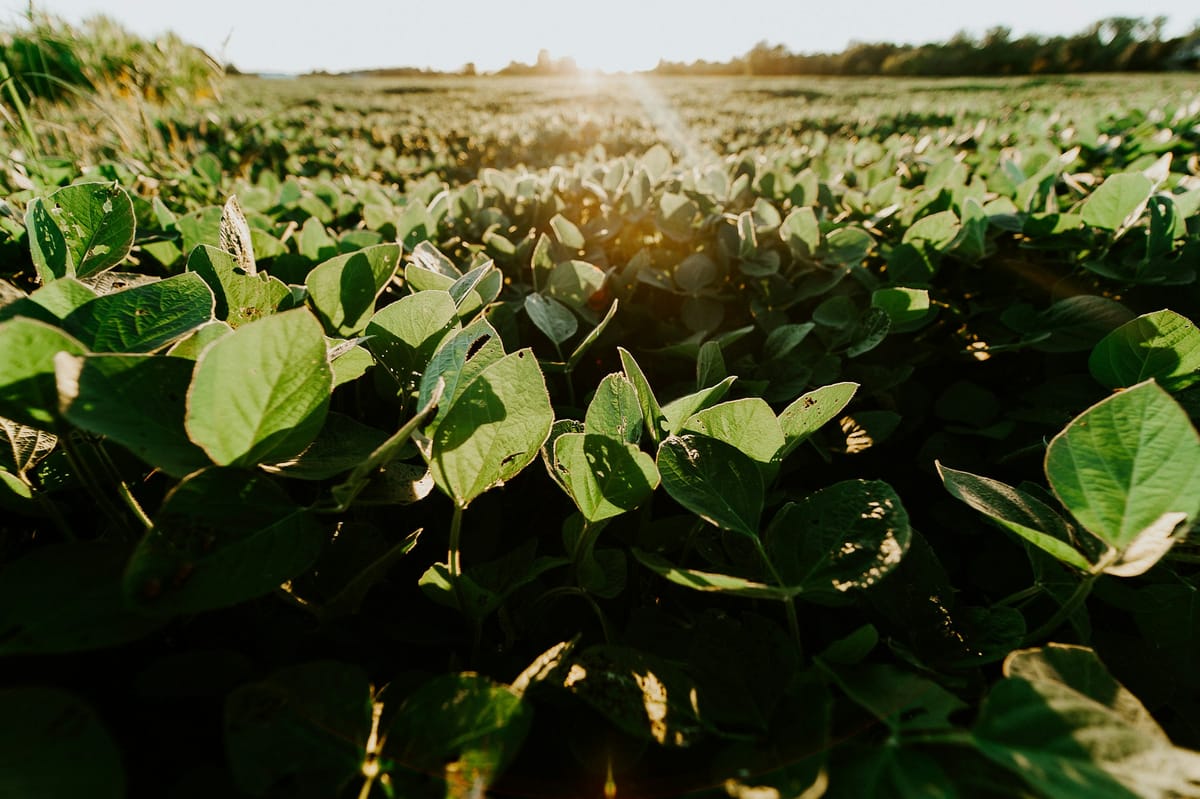
As Beijing turns off the tap on U.S. soybeans and rewires its feed economy, the world’s most traded crop becomes another front in the long war of economic self-reliance.
The humble soybean has long been more than merely a crop, for it is a quiet barometer of global power, the unsung actor that links American farmland, Chinese hog pens, and the Amazon’s expanding edge. For decades, that system ran on a predictable rhythm: the United States grew, China bought, to a great degree, to feed its pigs, and Brazil filled the seasonal supply gaps. In 2025, though, Beijing has effectively ended that bargain.
Not a single new cargo of U.S. soybeans has been booked since the summer harvest began.
What looks like a trade freeze is, in truth, a structural pivot, one that could redraw the map of global agriculture and deepen the world’s economic fracture lines.
The vanishing buyer
China has made no new purchases of U.S. soybeans for months, even as record shipments flow from Brazil. Between June and August, exports from American ports to China were effectively zero. (Agriculture.com). The reason is neither drought nor is it demand collapse, it is tariffs. Following the spring offensive initiated by Washington that has seen an ongoing flurry of trade attacks, Beijing’s retaliatory duties on U.S. soybeans now stand at roughly 34 percent, rendering them effectively uncompetitive. Chinese trade officials have stated plainly that any resumption will hinge unequivocally on tariff removal.
Brazil, for now, has been retained to fill the gap. Its January-August shipments to China hit record levels as Chinese buyers front-loaded purchases, yet this substitution isn’t quite as it may seem on the surface, and hides a deeper strategic shift. Beijing is not just swapping suppliers; it is rewriting the nutritional math of its entire feed economy.
Rethinking the hog
More than 80 percent of China’s soybean imports end up crushed into soymeal, the protein basis of pig and poultry feed, and with China home to over half the world’s pigs, even small changes in feed formulas can ripple into waves that crash across continents. And to that effect, in June, Reuters reported that China aims to cut soymeal content in feed from about 13 percent in 2023 to 10 percent by 2030, the ripple that could lead to an annual reduction of ten million tonnes.
Accordingly, the government has adjusted its feed standards to allow lower protein minimums and even caps in certain cases. And the impact? The largest corporate farms, on the one hand with access to nutritionists and synthetic amino acids, can adapt quickly, but for the millions of smallholders, less soy means economic hardship: slower growth rates and thinning margins.
The state’s bet here is that industrial consolidation, trending towards fewer, larger producers, will offset those inefficiencies and cumulatively strengthen control, self-reliance, over what is a key food sector.
From tariff war to protein war
Behind these technical moves sits a strategic calculus. During the first trade war moves of 2018-19, Beijing watched how easily Washington weaponized its agricultural preeminence, and tariffs and export bans exposed China’s evident dependence on U.S. crops. The lesson learned was, emphatically, that food security is national security, and cutting soybean dependence may achieve a certain level of political and economic insulation.
By diversifying supply toward Brazil, Argentina, and even Russia, in tandem with the development of homegrown and synthetic alternatives, China is building redundancy into its protein supply chain. State funding into high-yield domestic soybean varieties, microbial protein startups, and extensive research on insect-based feed has resulted in an emerging protein Cold War, one where technology defines advantage, not acreage.
For the U.S., the loss is immediate and tangible. Simply put, soybeans are its largest agricultural export by value, and China once bought more than half the total annual volumes. Now, with that market evaporated, prices at Midwestern suppliers have sagged and the storage bins are brimming. Unsold stocks could exceed 300 million bushels by year-end, something that will depress farm incomes and is prompting renewed calls for government “trade aid.” US Soy Growers notes that without either renewed China demand or viable new markets, many farmers will be forced to switch acreage from soybeans to alternative crops, corn or sorghum, next season, products already burdened with tight margins.
Boom, and burden, for Brazil
Brazil’s Mato Grosso region is cashing in, becoming the world’s soybean capital, exporting nearly 100 million tonnes last year, much of it to China. Nothing comes without a price, though, and expansion equals ecological cost. Satellite data compiled by Mongabay show that soy-driven deforestation in the Cerrado and Amazon fringe continues to climb, eroding biodiversity and carbon sinks even as export earnings rise.
The same economic vulnerabilities that plague the U.S. Midwest today can also, of course, appear in Brazil. This is not just a boom, but a risk of investment, and the deeper Brazil goes ‘all in’ on new ports, railways, and river transportation, the tougher it will be to extricate if Chinese demand wobbles, the politics sour, or, somehow, regular imports from the U.S. resume.
Perhaps, in short, this means that the world is not de-risking; it is merely redistributing the risk.
Feedback loops
The geopolitics of agriculture are just that, global, and fewer U.S.–China flows in general mean altered shipping patterns and freight rates, and knock-on effects for global fertilizer and biofuel markets. For example, soybean oil is a key feedstock for renewable diesel in the United States, and lower export demand could make it cheaper domestically, which helps energy producers but hurts growers. Meanwhile, Chinese firms are consolidating their interest in the full production chain, investing in Brazilian crushing facilities to lock in control from field to feeding trough.
Back to the notion of the ‘Protein Cold War’. For the Global South, this shift tightens competition for protein access, with countries in Africa and South Asia that rely on imported soymeal facing higher prices as China vacuums up the majority of South American supply. Some are experimenting with indigenous legumes or algae-based substitutes, but the transition is uneven.
In effect, Beijing is pivoting to corner the market.
Economic self-reliance = strategic exposure
From Beijing’s vantage point, reducing U.S. agricultural leverage is worth the current friction. The state can manage higher costs, but what it fears most is dependence. This fits the pattern seen in other economic strata: semiconductors, critical minerals, and green technologies, a push for strategic sufficiency within a globalized economy it perhaps no longer wishes to trust.
Yet the paradox still remains, diversification can become another form of vulnerability, and by concentrating supply chains in the southern hemisphere, China inherits their potential climatic and political risks, threatening feed security as surely as tariffs once did.
For Washington, however, soybeans are another warning that economic deterrence isn’t a one-way street; it has consequences. Weaponizing trade may yield short-term wins, if any, but it more assuredly accelerates strategic decoupling, and once a buyer learns to live without you, your leverage is gone.
The soil beneath
At its core, the soybean story is about that feedback: how political choices can reshape ecosystems, and in turn, how those ecosystems constrain politics. Every hectare of new soy in Brazil can be seen as both a symptom and a cause: feeding China’s pigs yes, replacing U.S. exports, sure, but also releasing carbon that undermines the climate pledges all parties claim to uphold. Food security now functions clearly as political leverage, blurring the traditional line between trade policy and foreign policy. (Aspen Institute).
The quiet, yet lately slightly louder, drama of 2025’s harvest season shows what that looks like in practice: two superpowers squaring off, testing resilience not through tanks or tariffs alone, but through the planet’s living systems themselves. This is why the next major phase of decoupling, of geopolitical fracture, may not unfold in the boardroom or the chips lab, but in the soil, where economics, climate, and survival intersect.
Read this. Notice that. Do something.
Read this: Reuters – China’s big feed shift may curb soybean imports; Agriculture.com – China halts new U.S. soybean purchases; Mongabay – Brazil soy expansion and deforestation data
Notice that: Beijing’s “feed reform” isn’t just a policy tweak, but a long-term structural maneuver to decouple from U.S. agricultural leverage. Brazil’s luck may be temporary, rooted in ecological extraction that will deepen both nations’ vulnerabilities. What looks like a trade reshuffle is really the birth of a new dependency chain.
Do something: Follow where your food and fuel originate. Push for supply-chain transparency in the commodities you consume or invest in. Support certification schemes and watchdog reporting that track deforestation and trade flows, because these invisible linkages shape both ecosystems and power systems.
Previously on GYST: Power Transit: The New U.S.–India–Gulf Triangle
Next up: Water wars 2.0: the Tigris–Euphrates rebellion