
China’s Soft Power Plateau?
China may be plateauing in Western perception, but in the Global South, energy, infrastructure, and trade outreach still build influence. Here’s why soft power is now two-tiered.

A Story of Two Worlds, One Vacuum
When Beijing hosted the 2008 Olympics, the fireworks weren’t just in the sky. That opening ceremony, precision-drilled, lavishly choreographed, and broadcast to billions, was China’s calling card to the world: we have arrived.
For a time, it worked.
Commentators mused about a “China model” that paired economic dynamism with authoritarian efficiency. Confucius Institutes proliferated across campuses, Belt and Road deals stacked up, and surveys suggested rising admiration for China’s rapid ascent.
Fast-forward to today, and the story looks somewhat muddier. China hasn’t lost influence outright, but its soft power now operates on two sharply diverging tiers.
Tier One: The Global North’s Cooling Gaze
In the world’s wealthiest democracies, Beijing’s glow has dimmed.
A 2023 Pew Research Center survey found that majorities in North America, Western Europe, Japan, and Australia hold unfavorable views of China, often by margins exceeding 70%. The reasons aren’t hard to surmise: assertive “wolf warrior” diplomacy, crackdowns in Hong Kong and Xinjiang, censorship exported abroad, and heavy-handed pressure on companies and universities.
Even Europe, once tempted by commercial ties and even now during a period of relative economic turbulence with the U.S., has grown wary. Brussels now calls Beijing a “systemic rival,” while Germany and others rework certain supply chains to reduce reliance on Chinese markets. In the U.S., bipartisan consensus has consolidated: China is framed not only as a competitor but as the defining geopolitical challenge of the century, a sentiment shared largely (in varying terms from the bellicose to the intensely rivalrous) by actors on both the right and left of the aisle.
In short, China’s soft power in advanced economies is perhaps less soft and more brittle, fraying under the weight of suspicion and resentment. Admittedly, this suspicion is often fueled during a precarious political moment to frame an opponent for opposition’s sake and to focus outward rather than inward towards the domestic maelstrom of division. That it exists, however, makes it no less potent.
Tier Two: The Global South’s Warmer Embrace
However, in much of the Global South, the picture looks slightly different.
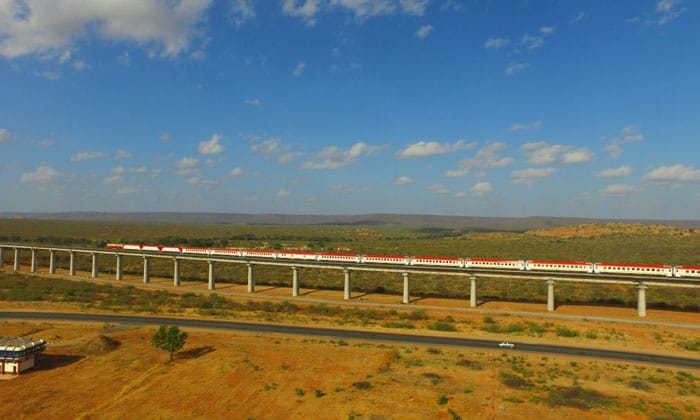
Across Africa, Latin America, Southeast Asia, and parts of the Middle East, China retains considerable goodwill. The Afrobarometer finds that Africans still view China positively, particularly for visible infrastructure projects: highways, ports, stadiums, and rail lines that Western aid often failed to deliver. Take Kenya’s Standard Gauge Railway, financed and constructed by Chinese firms and completed in 2017. While critics have flagged concerns over debt sustainability and environmental impact, the line has undeniably reshaped domestic transport, cutting travel time between Nairobi and Mombasa from 12 hours to around 4–5 hours.
For many Kenyan businesses, farmers, and travelers, the railway is a visible, tangible benefit that reinforces a positive perception of China. It has endowed practical results that often outshine abstract debates over governance or human rights. (World Bank overview)
In Latin America, surveys by Latinobarómetro show that while views of China fluctuate, it remains seen as an alternative pole of choice to outright U.S. dominance. And in Southeast Asia, the ISEAS-Yusof Ishak Institute reports that although concerns over Chinese assertiveness exist, China is still widely regarded as the region’s most influential economic player. One that, notably, is also somewhat feared.
For many developing nations, the calculation is straightforward: Chinese loans and investment bring tangible results that can also translate into domestic political favor, even if the repayment terms are heavy. In contrast, U.S. engagement often arrives filtered through conditions, political lectures, or, lately, outright neglect. The recent scattershot barrage of international tariffs coming from Washington certainly hasn’t been received with warmth.
Here though, China’s story is less about “frayed” power and more about transactional trust. The bulldozers and fiber-optic cables speak louder than lectures on democracy.
The Vacuum Washington Leaves Behind
This two-tiered reality is not just about China, it’s also about the United States.
While Beijing may be plateauing in soft power among wealthy democracies, the U.S. is hardly capitalizing. Under both the current and prior administrations, U.S. foreign policy has swung toward a sharper focus on domestic politics, with aid and engagement abroad often framed in terms of short-term wins for domestic constituencies. The chaotic Afghanistan withdrawal, shifting commitments to allies, and a fixation on culture wars at home have all eroded the perception of American reliability elsewhere.
In much of the Global South, Washington’s rhetoric about freedom and democracy feels increasingly hollow, U.S. strategy too often defaults to security alliances while neglecting the economic tools, that’s to say trade, investment, infrastructure, that shape daily realities.
That neglect creates a vacuum. And physics advises us that vacuums rarely stay empty for long.
Plateau or Pivot?
The next decade will show whether China’s soft power stall is terminal, or whether Beijing can recalibrate, even slightly rebrand?
If it doubles down on surveillance exports, heavy-handed diplomacy, and coercion, its plateau could tip into decline, leaving both tiers skeptical. However, if it finds a way to pair economic outreach with a somewhat lighter cultural touch, China could continue expanding its appeal across much of the Global South, and perhaps claw back a modicum of credibility in the North, especially if the U.S. continues to adopt a more insular international posture.
This is not a morality play. It is a contest for influence, shaped less by ideals than by roads built, investments delivered, and partnerships sustained. While China may look a little stalled in Berlin, Ottawa, or Tokyo, it still looks a little more like an opportunity in Nairobi, São Paulo, and Jakarta.
And if Washington keeps tripping over itself, Beijing may not need fireworks to remind the world that it’s still in the game.
Read this. Notice that. Do something.
Read this: Pew Research Center on declining views of China in advanced economies.
Notice that: Afrobarometer shows sustained African support for Chinese investment, and ISEAS data highlights Southeast Asia’s pragmatic embrace.
Do something: When evaluating geopolitical “decline,” ask: decline for whom? Pay attention to which global voices, Northern or Southern, are amplified in your news feed by the algorithm you pour your choices into. The story changes depending on where you choose to stand.