
Pocket power: how China is rewriting the AI rules
AI is shifting from cloud servers to the devices in your hand. China is driving this move with Huawei and domestic chips, reshaping features, privacy, and prices. The geopolitics of on-device AI will decide what tools you get, and who sets the rules.

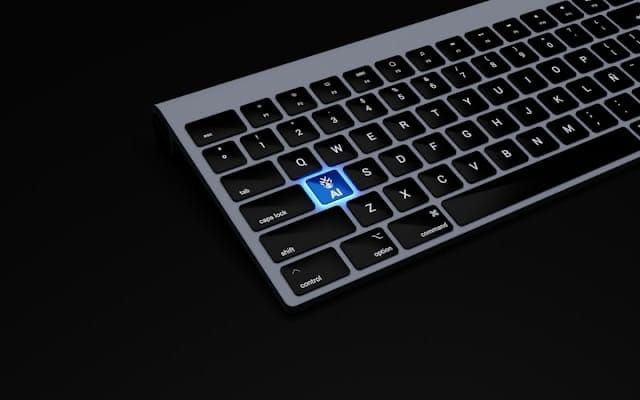
Artificial intelligence is shrinking. For the last few years, using powerful AI meant logging into a cloud service, tapping servers housed in vast data centers, and trusting their owners with the processing and the data. AI has gone from server farms the size of football fields to chips no bigger than a fingernail. As we all quite suddenly see, a shift is underway: AI models have quickly moved onto the devices you hold in your hand, phones, tablets, and laptops.
This shift is not just about convenience, it is about who controls the hardware, what features are available and, ultimately, which governments set the rules. And as with most things in AI right now, China sits at the center of the story.
Why on-device AI matters
Cloud AI relies on heavyweight clusters powered by a few chipmakers. On-device AI, however, uses smaller, optimized models that run on specialized chips inside consumer devices. Apple has previewed “Apple Intelligence” for new iPhones, Samsung is embedding generative features across its Galaxy line, and Huawei is pushing AI into handsets while it builds a China-based domestic chip stack to support that strategy, including new Ascend road maps and computing platforms announced this month. (Reuters.)
For consumers, on-device AI is quickly resulting in ‘assistants’ appearing, well, everywhere. They transcribe calls, summarize notes, rewrite text, or edit photos, with less reliance on the cloud, usually meaning faster responses, offline functionality, and fewer privacy concerns since more processing remains on the device.
China’s central role
U.S. export controls seek to constrain access to top-end data-center chips, and Chinese firms are betting on on-device AI as a practical route around those barriers. Huawei’s handset strategy draws on domestic silicon paired with software tuned for smaller models, while regulators in Beijing press big tech to favor national chips over Nvidia’s offerings, after a U.S. ban on Nvidia sales, as the Financial Times reported. (FT.)
Beijing is also framing on-device capabilities in a somewhat ‘democratized’ manner, as a “people’s technology,” a way to broaden access, strengthen self-reliance, and export AI-ready hardware to partners. The public announcements around Huawei’s Ascend chips and “SuperPod” clusters are reinforcing that narrative of domestic resilience, even while the silicon is a step behind the frontier products in the marketplace. (AP.) As Huawei executive Zhang Ping’an put it, “Nobody will deny that we are facing limited computing power in China … But we cannot rely solely on having the AI chips with the advanced manufacturing process nodes as the ultimate foundation for AI infrastructure” (Reuters).
Geopolitics in your pocket
The rivalry will, of course, change what shows up on store shelves. Buy an iPhone, you get polished features shaped by U.S. and EU rules; buy a Huawei phone, you get an all-Chinese stack trained on domestic data; buy a Samsung, you get a hybrid optimized to fit the target market. The question is simple: how comfortable are Washington and Brussels with millions of citizens using AI embedded in Chinese hardware?
Meanwhile, for Beijing, each Huawei handset is a proof point that barriers can be overcome, that mass diffusion of consumer AI cannot be throttled at the border.
What this means for consumers
On-device AI is being marketed as an evolution, an upgrade, but the geopolitics nevertheless touch daily life. Features may vary by model and country, some regions getting pared-back tools and others seeing quicker rollouts and access. The differing rules that govern device makers in different regions mean that data handling and performance will vary according to where you live. Pricing will also diverge, if Chinese firms scale on-device AI faster, we can expect cheaper AI-enabled phones and appliances in many export markets, which in turn will pressure Western firms to either cut costs or push into premium product tiers.
“Nobody will deny that we are facing limited computing power in China … But we cannot rely solely on having the AI chips with the advanced manufacturing process nodes as the ultimate foundation for AI infrastructure”
Zhang Ping’an, Huawei
The Global South as the prize
China is thinking globally here, beyond its domestic market. Huawei and Xiaomi are expanding AI-ready devices across Southeast Asia, Africa, and Latin America, where connections can be patchier and pricing concerns higher. In these markets, on-device AI is not just a convenience, it will be a necessity as the tech evolves: translation in rural schools, medical triage in Kenyan clinics, or crop advice in Vietnamese fields, all without broadband. The ability to rely on AI-driven processes, offline, will be a liberating gamechanger. Reporting shows Huawei building out AI infrastructure and handset access across emerging markets, pairing low pricing with long-standing relationships to directly challenge U.S. ambitions to dominate AI proliferation. (Rest of World.)
For Western firms, these markets are harder when business models are predicated on cloud subscriptions and continuous, robust connectivity. The risk is, already, a new kind of AI divide: Western devices rich in features but costly, Chinese devices widely available and deeply embedded outside the West.
The new regulatory frontier
Regulation is struggling to keep up. The EU’s AI Act, which began phasing in last year, was designed with cloud services and big labs in mind. However, once AI lives inside your phone or car, the line blurs: who is responsible, the model builder or the device maker? Enforcement means chasing targets across a shifting ecosystem. (European Commission summary.)
In the United States, California’s proposed SB 53 points in the same direction. It would force large developers to publish safety plans and disclose failures within two weeks, a state law that could then be a proxy to set de facto national standards, reshaping how features arrive on consumer devices. (Vox explainer.)
Meanwhile, China is opting for control, AI development and deployment at home. Regulators are pushing firms like Huawei to build on domestic chips and to align features with national content rules. In Beijing’s narrative, this is not bureaucracy but sovereignty: AI as a system tuned for local values, governance, and efficiency, and shielded from outside leverage. (Reuters.)
Beyond the hype
It is easy to dismiss on-device AI as a set of clever phone tricks, but the precedent has already been set in tech to dispute this. We’ve seen time and time again that when computing power moves into consumer devices, the effects compound. The smartphone reordered finance, media, and politics; whereas on-device AI could reorder daily life itself.
In a fractured global economy, those gates will increasingly reflect national choices and political approaches, and these will determine the nature of the tools in your pocket, the data that stays on your device, and the price you pay.
Read this. Notice that. Do something.
Read this: Reuters on Huawei’s Ascend plans and computing platforms, which aim to replace restricted imports over time; FT on China restricting Nvidia chip purchases by major platforms; Vox on California’s SB 53 and why state rules may set national norms. (Reuters; FT; Vox.)
Notice that: Huawei and Xiaomi are accelerating into the Global South where offline capability and price matter most, while Western regulators concentrate on cloud developers, leaving a gap at the device layer. (Rest of World.)
Do something: Check which AI features ship on your device, who makes the chip, and what rules govern firmware updates. Track EU AI Act timelines for consumer-visible changes in 2025 to 2027, and watch California’s SB 53 decision, since it can ripple out into the product design that eventually reaches you. (EU AI Act timeline; SB 53 overview.)
Previously on GYST: China’s next five-year plan, AI moves from slogan to system, where Beijing’s industrial policy is steering the rules of the global economy.
Next up: The Mekong squeeze, Southeast Asia’s shared river is turning into both a climate battleground and a test of regional power.